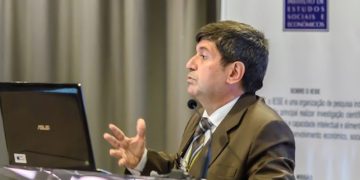





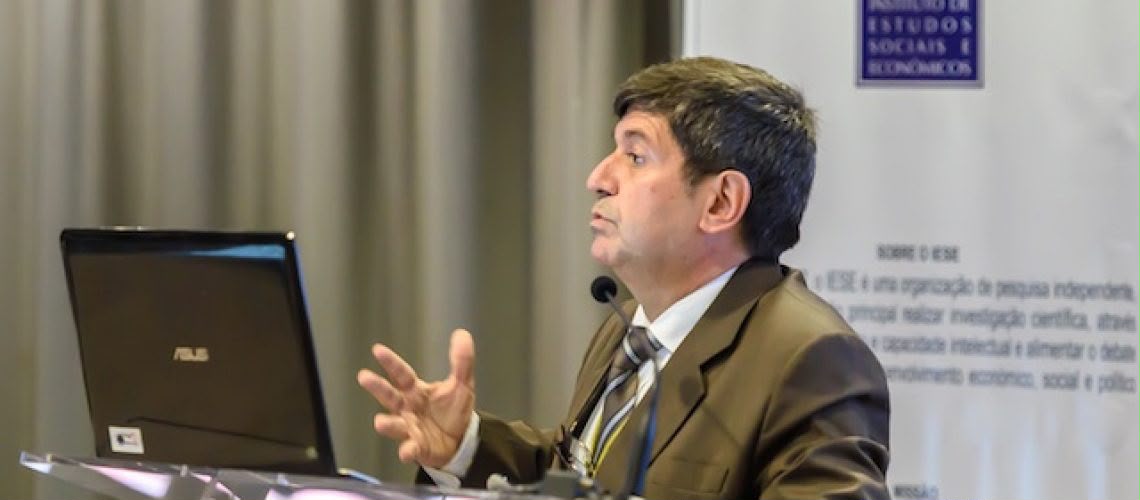
– Professor António Francisco in an interview
By Ricardo Dias
Maputo (MOZTIMES) - President Daniel Chapo said that Mozambique faces the risk of a “social and economic disaster” because its population has been growing faster than its economy. Chapo made the statement at the opening of the Conference on Population and Development in Mozambique, held on 4 November in Maputo.
To examine this risk, The Mozambique Times (MOZTIMES) interviewed demographer and economist António Alberto da Silva Francisco, Emeritus Professor at Eduardo Mondlane University.
António Francisco is an independent consultant in development, public management and political economy. He has more than 40 years of experience in research on population dynamics, poverty and public finances, with an emphasis on social protection mechanisms in contexts of underdevelopment and development.
MOZTIMES is publishing the interview in full, in question-and-answer format.
Ricardo Dias (RD) – Professor António Francisco, for more than two decades you have been warning of the urgent need for a debate on population in Mozambique. How do you assess President Daniel Chapo’s decision to put this issue at the centre of the official agenda at the recent Conference on Population and Development? Do you feel that the academic community has finally been heard?
António Francisco (AF) – I welcome the President’s initiative with interest, although my expectations are modest. As you rightly say, for more than two decades I have been trying to bring the relationship between population and development into public debate. Unfortunately, political disinterest has been more persistent than my own efforts. It would therefore be contradictory of me to overlook the importance of this initiative. But recognising a problem does not demonstrate an ability to tackle it. Especially in a country where politicians and bureaucrats love conferences, seminars and billboards, invariably accompanied by the promise that ‘this time will be different’.
As for whether the academic community has finally been heard, I think it is too early to say. There is no shortage of studies and recommendations. What has been lacking is the translation of knowledge into decisions that make a difference and are judged by their results.
It would be neither sensible nor fair to expect the President to speak as an expert in demography or economics. That is what specialists and institutions, including the revived Ministry of Planning and Development, are there for. But I would expect this ministry to offer the President something more substantial than the announcement that ‘the economy needs to grow faster than the population’. That is a basic arithmetic condition, not a development strategy.
I therefore welcome the opening of the debate, but I will only consider the academic community to have been heard when knowledge influences decisions and those decisions produce verifiable results for which those responsible are held accountable.
RD – The President has publicly endorsed the projection that the population will reach 60 million by 2050. In your view, does the current Government show that it understands the true scale and pace of this growth, or is its approach still purely statistical?
AF – The figure of 60 million people in 2050 is not a presidential discovery. It is a demographic projection based on assumptions about fertility, mortality and migration, of the kind that both the United Nations and the National Institute of Statistics have been producing for years.
The main point is not whether there will be exactly 60 million of us, but what it means to add around 25 million people to the current population in less than a quarter of a century. That amounts to about one million additional people a year on average, with a growing need for schools, hospitals, housing, water, energy and productive jobs.
I expected Daniel Chapo, as Head of State and Head of Government, to go beyond listing needs. What I would like to hear is whether the Government has assessed the capacity of education, health, transport and employment services to cope with such demographic pressure, and what concrete measures it intends to adopt.
There is also an often overlooked issue. Demographic dynamics are not independent of the economy. Fertility is influenced by education, living conditions, women’s autonomy and access to reproductive healthcare.
So, more than hearing the Government’s population projections from the President, I had hoped to hear its economic and social projections, with costs, resources and responsibilities clearly identified.
The challenge is not to announce how many Mozambicans there will be in 2050. It is to explain what conditions we will live in.
“The President is the Head of Government. It is his responsibility to demand results.”
RD – In his speech, Daniel Chapo stressed that a young population does not automatically lead to development and that the economy needs to grow faster than the population. However, Mozambique’s economic model remains heavily dependent on capital-intensive megaprojects. What urgent structural reforms would the economy need to undergo to absorb the more than 500,000 young people who enter the labour market each year?
AF – It is surprising that, after more than fifty years of independence, the need for the economy to grow faster than the population is presented as a discovery. That is a basic arithmetic condition, not a development strategy.
According to an analysis I carried out using data from the Penn World Table 11.0, Mozambique’s economy grew more slowly than its population in 16 of the 48 years between 1976 and 2023. Nine of those years fell during the civil war, but seven came after the 1992 Peace Agreement. Between 1989 and 2009, real GDP per capita rose by 119%. Between 2009 and 2023, it rose by just 28%.
Meanwhile, more than 500,000 young people seek to enter the labour market each year, while the economy creates around 30,000 formal jobs. Megaprojects increase GDP and exports, but employ relatively few people.
A productive economy cannot be created by decree, nor can unemployment be solved by turning young people into applicants for government funding. We need agricultural productivity, competitive businesses, private investment, legal certainty and functioning markets.
And let us remember that, under the Constitution, the President is also the Head of Government. It is his responsibility to demand results, not merely to announce broad objectives.
The question is simple. What will he do differently, and how will we know whether it is working?
RD – You have often warned that Mozambique risks creating a ‘low-productivity population’ and a crippling dependency ratio. If the current pace continues, how close are we to a social breakdown caused by youth unemployment?
AF – When I speak of a low-productivity population, I am not suggesting that Mozambicans have any inherent inability. I am referring to an economy that keeps millions of people engaged in very low-productivity activities, even though they work hard.
According to the Poverty Reduction Strategy, Mozambique had approximately 103 dependents per 100 people of working age. But there is another, more worrying form of dependency: economic dependency. Being of working age, or even having a job, does not guarantee enough income to support a family.
Hence the illusion of the so-called ‘demographic dividend’. A young population does not automatically confer an economic advantage. Without productive transformation, employment, savings and investment, a young population can put increasing pressure on available resources.
As for social breakdown, it would be irresponsible to predict when it will happen. But the economic and social tensions are evident, and the protests following the 2024 elections showed that stability cannot be taken for granted.
My concern is not to predict when a breakdown will occur, but to understand why we continue to reproduce the conditions that make it possible.
The challenge is not to prevent young people from rising up. It is to give them real opportunities to build a better life.
‘International cooperation can help, but it cannot permanently replace domestic capacity’
RD – The Head of State stressed the need to invest in human capital (education, health and efforts to combat early unions). Given the Mozambican state’s chronic budget constraints, where should the Government find the resources to finance this structural investment without deepening its dependence on external funding?
AF – I would start by asking whether Mozambique’s problem is simply a lack of money or also the way it uses the resources available to it.
According to the World Bank, in 2024 public sector wages and interest payments on debt absorbed the equivalent of 91% of tax revenues. This severely limits the ability to fund essential services.
The Government should start by reviewing unproductive spending, unjustified privileges, tax breaks with no demonstrable return and public investments of doubtful value. But that is not enough.
The structural solution is to expand the economy’s capacity to produce, save and invest. Without productive businesses, rising incomes and a broader tax base, we will remain dependent on external financing.
Nor is it enough to spend more on education and health. We need schools where children actually learn and health facilities that provide quality care. Girls’ education, reproductive health and efforts to combat early unions are essential, regardless of any promise of a ‘demographic dividend’.
International cooperation can help, but it should complement domestic capacity, not permanently replace it.
The challenge is not to find ever more money to finance development. It is to stop perpetuating an economy that cannot generate the resources it needs to transform itself. It is precisely the persistence of this situation that I seek to explain in my research on Mozambique on the Path to Underdevelopment.
“Underdevelopment cannot be overcome with slogans such as ‘Let’s get to work!’”
RD – To make the demographic equation add up and ensure that this growing population has access to decent basic services, GDP would need to grow at extraordinary rates (above 10–12% a year). Do you think it is realistic to achieve this pace over the next decade, or will Mozambique have to learn to manage a permanent social crisis?
AF – I would start by asking where the idea that Mozambique needs to grow by 10% or 12% a year comes from. What calculation shows that those rates would guarantee decent basic services?
I do not rule out the possibility that we will see growth rates of that order. Indeed, the IMF itself projects that Mozambique’s GDP will grow by 11.9% in 2030, linked to major natural gas projects coming into production. But for that same year, it forecasts just 4% growth in the economy excluding the extractive industries.
The difference is fundamental. It is one thing for GDP to surge as a result of a gigaproject. It is another for the national economy to become more productive across the board. In other words, extraordinary growth rates may occur temporarily, but they do not demonstrate sustained development. Nor is the alternative to resign ourselves to a permanent social crisis.
Underdevelopment cannot be overcome with spectacular targets or slogans such as ‘Let’s get to work!’ It is overcome by transforming the mechanisms through which GDP grows so that growth is accompanied by sufficiently broad improvements in productivity, domestic savings and living conditions.
“Development is not measured by the trips government leaders make”
RD – If you had the opportunity to make a single recommendation to President Daniel Chapo on what he should prioritise immediately in this area during his term of office, what would it be?
AF – If I had to recommend a single priority to President Chapo, it would be to stop confusing governing with announcing intentions and start showing that his government can correct mistakes in public policy.
Mozambique has no shortage of plans, strategies, conferences or assessments. What has been lacking is a critical assessment of the results, an acknowledgement of failures and action to correct the mechanisms that keep reproducing them.
I would recommend a public, independent review of the main economic and social policies, identifying specific obstacles, who is responsible, deadlines and verifiable results. And I would start with the state itself, looking at running costs, the quality of spending, privileges and barriers to productive investment.
The President does not need to discover a new theory of development. He needs to ensure that his government stops repeating policies that have yielded no demonstrable results. Because development is measured not by the trips government leaders make, the conferences or the promises, but by citizens’ growing ability to produce, save, invest and improve their living conditions. (RD)