




By MOZTIMES
Maputo (MOZTIMES) – Mozambique’s ruling FRELIMO Party on Saturday closed a meeting of its Central Committee session with bold promises of economic independence and national sovereignty, yet the reality is harder to ignore: the fight against insurgents in the northern province of Cabo Delgado still rests on Rwandan soldiers funded by external sponsors, and the World Bank is claiming that Mozambique is the world’s second poorest country.
President Daniel Chapo’s rhetoric of self-reliance thus collides with the stark dependence on foreign troops and international lenders.
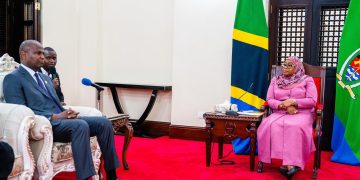
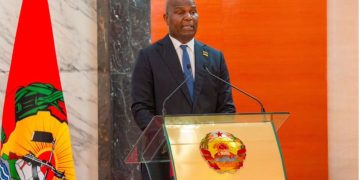
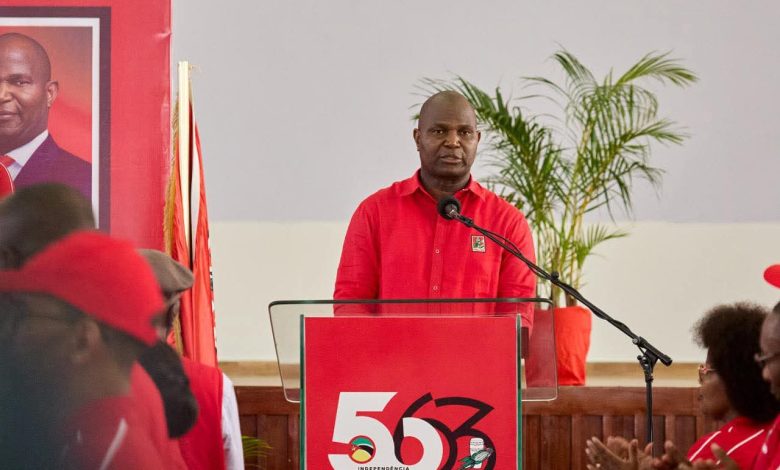
Speaking at the close of the Central Committee meeting, Chapo framed economic transformation and national security as intertwined priorities, as the country navigates global uncertainty and internal instability.
The meeting placed strong emphasis on leveraging Mozambique’s vast minerals and other strategic resources to drive industrialisation and reduce external dependence. “We are creating the foundations for effective economic independence,” Chapo said, highlighting the need to convert resource wealth into broadly shared prosperity.
As part of that push, he announced the creation of a Presidential Office for Strategic Reforms and Projects, tasked with advancing structural reforms and coordinating long-term development priorities.
The move signals a more assertive policy direction, with authorities seeking to strengthen domestic control over resource-driven growth while investing in technical skills and industrial capacity.
Chapo stressed that economic ambitions are under pressure from rapid population growth, which is intensifying demand for jobs, education and essential services, particularly among youth.
At the same time, he acknowledged that security challenges remain a major constraint. Mozambique continues to face a jihadist insurgency in Cabo Delgado, which has disrupted natural gas projects and displaced around a million people, while posing broader risks to investor confidence.
Describing terrorism as a “complex and transnational phenomenon,” Chapo said the country must enhance its military capacity to avoid long-term reliance on foreign forces. Yet the reality is stark: Mozambique’s counterinsurgency effort still leans heavily on Rwandan troops, whose presence depends on external sponsorship. Their withdrawal, should funding dry up, would expose the fragility of Mozambique’s sovereignty claims.
“The defence of national sovereignty cannot be delegated,” Chapo insisted, pointing to plans to modernise and strengthen national defence and security forces. But the contradiction is evident—sovereignty remains outsourced, and the country’s ability to stand alone is far from assured.
Despite these pressures, the Central Committee reaffirmed its commitment to political dialogue and national unity, while warning against actions that could undermine stability under the guise of democratic freedoms.
The session concluded with a renewed pledge by Frelimo to steer Mozambique toward a more self-reliant economic model, anchored in resource management, industrial growth and strengthened state institutions. Yet the paradox remains: a nation proclaiming independence while tethered to foreign soldiers and international lenders.
As for the World Bank, Finance Minister Carla Louveira has accused the Bank of using outdated statistics in its latest report on Mozambique.
Speaking to reporters on the sidelines of last Tuesday’s celebrations of Mozambican Women’s Day, Louveira said that, although the report bears the date March 2026, the data comes from 2019.
“The statistics used were collected in the period of the Covid-19 pandemic and were published in 2022”, said Louveira. Furthermore, the World Bank report only looked at “consumption poverty”, assessing whether households had enough money to acquire a “basic basket” of goods and services, whereas the Mozambican government has a broader definition of what it calls “multi-dimensional poverty”.
The Minister noted that the World Bank's timeline for the Mozambican case differed from those for other countries. “In many of these countries”, said Louveira, “the comparative analysis was made with recent household surveys. If we were to use these more recent data, the picture of our country would obviously be different”. (MT)