


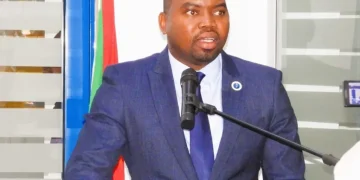


- The Fund expects to receive about USD six billion annually, from the exploitation of the natural gas of Cabo Delgado, intended for savings and investment.
By Lúria Mabui
Maputo (MOZTIMES) – Governance watchdog organisations are questioning the independence of the individuals who are members of the advisory bodies of Mozambique’s sovereign wealth fund, which was set up recently to manage the billions of dollars in revenue from the natural gas produced in Cabo Delgado province.
Last September, the Council of Ministers appointed Omar Mithá, the economic advisor to President Filipe Nyusi, to chair the Consultative Investment Council of the Sovereign Fund, which is a body responsible for assessing the fund’s investment opportunities in various classes of assets, including shares, titles, buildings and infrastructures and to analyse the risks associated with the investments.
Mithá is currently Chaiperson of the Board of Directors of the National Investment Bank (BNI) and used to chair the Board of Directors of the National Hydrocarbon Company (ENH).
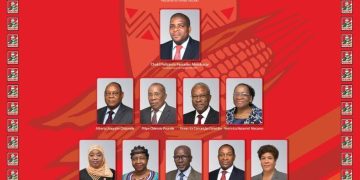
The Consultative Investment Council of the Sovereign Fund includes a further five people from other sectors of the Government, including Enilde Sarmento, National Director of Economic Policies and Development in the Ministry of Economy and Finance, as well as members from the private sector and academics.
The Mozambican Sovereign Fund began operating in 2024, four years after the presentation of the first proposal. The delay in approval of the Fund was due to disagreements between parliament, the Government and Civil Society concerning the model that should be adopted. The Government proposed a Sovereign Fund which would consist of a centralised governance of natural resources, while civil society organisations proposed a model of a development fund, open to civil society participation and intended for investments in the country.
In August, alongside the members of the Consultative Investment Council, the Mozambican parliament elected members of the Sovereign Fund’s Supervisory Committee, consisting of members from civil society, namely Benilde Nhalivilo, the chairperson of the Budget Monitoring Forum, and Estrela Charles, an economist in the Community Development Foundation, an organisation chaired by Graça Machel, widow of the first President of Mozambique, Samora Machel. Other members of the Supervisory Committee include representatives of religious denominations, academics, lawyers and the private sector.
The Supervisory Committee will be responsible for controlling and accompanying the revenue, deposits in the transitional account, allocation of revenue to the State Budget and supervising management of the fund. It should report on its activities to the Assembly of the Republic.
Lack of independence from the Government
Governance watchdog organisations in Mozambique believe that the members of the Consultative Investment Council and of the Supervisory Committee of the Sovereign Fund do not have enough independence from the Government to play their roles with impartiality and this could compromise the objectives of the Fund.
Fátima Mimbire, the Coordinator of the Civic Movement for the Sovereign Fund, believes that the composition of both the Supervisory Committee and the Consultative Council is undermined and calls into question the transparency of the Fund itself.
“To what extent is the chairperson (of the Council) independent of the Government? Dr. Enilde Sarmento was appointed a member of the council, and she is a National Director (of Economic Policies and Development in the Ministry of Economy and Finance). She was at the head of the creation of the Sovereign Fund, and was the person who most influenced the model of the fund that we have. To what extent is she independent of the Government?”, asks Mimbire.
She argues that the Government is breaking the law by appointing Government officials to supervise the Fund. “There is no way to guarantee that these bodies are going to operate in an unbiased and balanced way, focused on public interest in relations to the government, because, in the end, these are people who are in the Government’s confidence. And we face the risk of having decisions that are politically orientedʺ.
Rui Mate, an economist and researcher for the anti-corruption watchdog, the Centre for Public Integrity (CIP), believes that the transparency of the Fund will not depend solely on the composition of its bodies such as the Consultative Council and the Supervisory Committee, but also in the way these bodies will be monitored by third parties.
ʺIt is difficult to state that Mozambique already has the best version of the Fund. There are many aspects which are in the law setting up the Sovereign Fund, but which show potential risks for the Fund failing. The fund is still in its initial phase, and its effectiveness will depend on factors such as the quality of the management, political stability, and the capacity to adapt to economic and social conditions”, declared Mate.
Mozambique hopes to channel to the Sovereign Fund about six billion US dollars a year up to 2040, from the Rovuma Basin gas revenues. Of the amount channelled to the fund, 60% will be used to finance the State Budget, and the remaining 40% will be channelled to the Fund’s Single Account. This 60/40 division will last for the first 15 years of the lifespan of the Sovereign Fund, and after this period, the division will be 50/50.
Rui Mate says that the Sovereign Fund should publish regular reports, and independent external audits, and ensure the participation of civil society organisations in the process of parallel inspection, to ensure that public interests are safeguarded.
So far only one natural gas project in Cabo Delgado has begun to produce and export. This is the offshore Coral Sul project, operated by ENI, with an investment of about USD 7 billion. It began to export gas in the last quarter of 2023. The activities of the other two large projects, operated by TotalEnergies and ExxonMobil, which between them represent an investment of more than USD 50 billion, are suspended due to the jihadist insurgency in the region (where the gas will be extracted offshore, but should be processed onshore). (LM)