









By Ricardo Dias
Maputo (MOZTIMES) – It was a busy start to the morning outside the Supreme Court in Maputo. Dozens of journalists from various Mozambican and foreign media outlets had gathered there to cover the first day of the trial of an opposition leader in Mozambique.
Venâncio Mondlane, who came second according to the official results of the 2024 presidential election, is charged with five offences, including instigation and incitement to terrorism. If convicted, he could be barred from standing in the next presidential election in 2029.
As expected, there was a heavy police presence between Rua da Rádio and Avenida Zedequias Manganhela, along the stretch of Avenida Vladimir Lenine where the building housing the Supreme Court and the Office of the Attorney General stands. The road was closed to traffic.
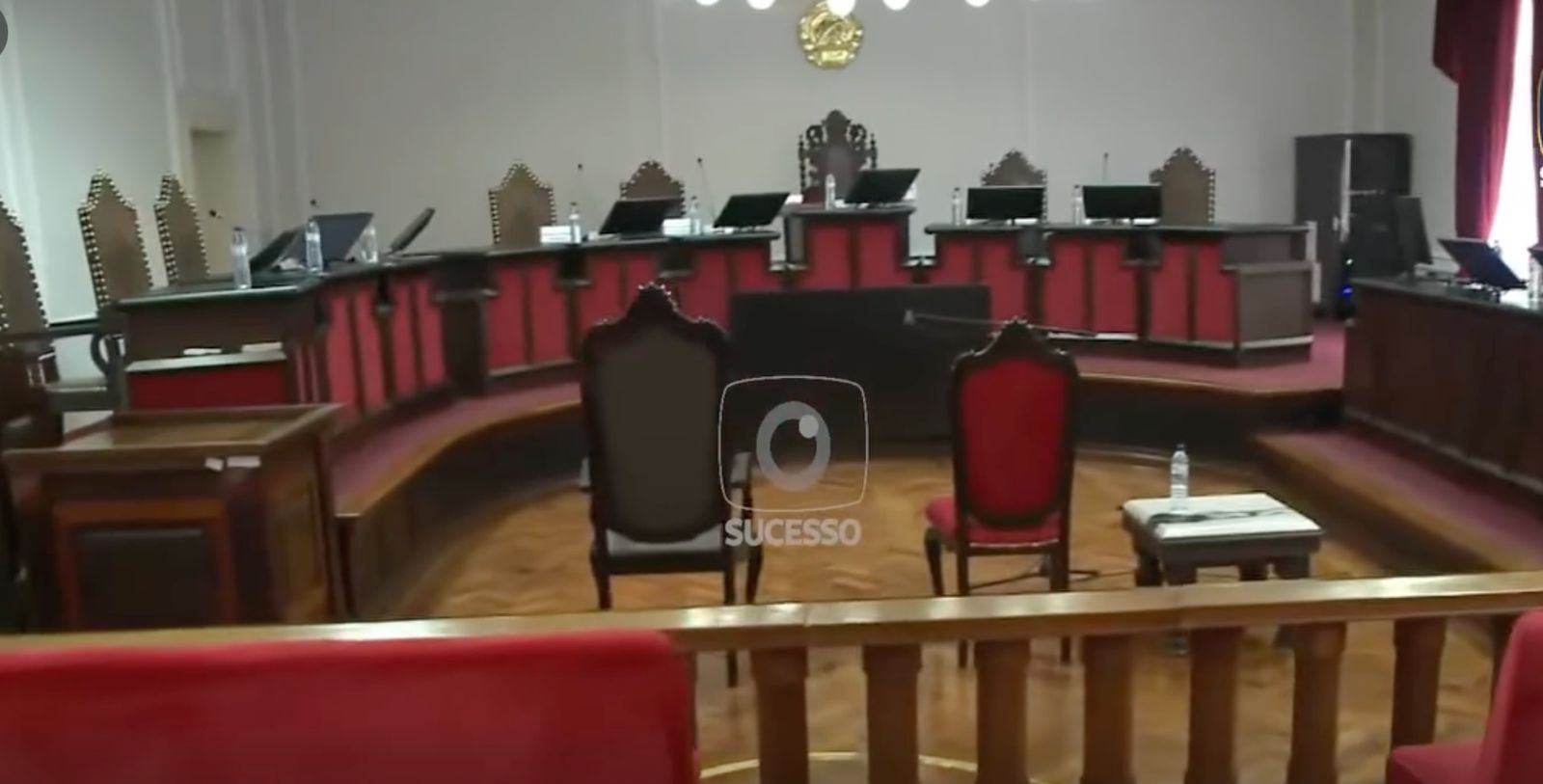
At around eight o’clock, a Supreme Court official tells the journalists they can enter the courtroom to film and take photographs, then leave. A group of journalists protests. ‘Are we supposed to photograph and film empty chairs and tables? Let’s wait until the defence, the prosecution, the judges and the public have taken their places,’ someone suggests.
The official left and never came back! A short while later, a second official turns up and says in a threatening tone, ‘Now’s your chance. Get your shots.’ And so they did.
Then those entitled to attend the trial began to go in. At the entrance to the court grounds there was a fixed metal detector and half a dozen men on security duty, looking like ‘bad guys’. There’s a list with the names of the journalists accredited to cover the trial, members of the public and Venâncio Mondlane’s 15 guests. Anyone whose name is missing from the list cannot enter the grounds. Among Mondlane’s guests are prominent activists, politicians and a few journalists who used that privilege to gain access to the trial.
The Supreme Court handpicked the media outlets it would admit to the courtroom, leaving more than 1,000 newspapers, radio stations, television stations, and magazines officially registered in Mozambique unable to cover the trial.
After passing through the first checkpoint, visitors receive a badge and are directed to a second checkpoint in a building fitted with a fixed metal detector. There, they have to fill in a form with their identification details and a list of the items they are carrying, explaining what they need any items they wish to take into the courtroom for. There is a locker where visitors leave their belongings. They can keep only a notepad and a pen… a BIC pen. No other brand is allowed.
After leaving their belongings, visitors go upstairs. The courtroom is on the right. The corridor leading to it is lined with photographs of the court’s presiding judges and justices, past and present. At the end of the corridor is a balcony overlooking Avenida Vladimir Lenine. The door is right there.
At the courtroom entrance, a man waits with a list. He calls people by name, one by one. Those who are there step forward and are searched with a metal detector, which is passed over their entire body. One journalist had to take off his hat to show he had no device or metal on his head. Another had to take off his press jumper because the detector was picking up metal.
‘We look like thieves,’ one journalist whispered. ‘I’ve never been subjected to such an intrusive search,’ said another.
After the third security checkpoint, finally, entry to the courtroom.
The room is entirely white, with colonial décor reminiscent of the European aristocracy of centuries past. The benches where the public sit to watch the proceedings are padded and covered in red velvet, making them comfortable. There are two big screens in the courtroom, one hanging from the ceiling for spectators and the other in front of the defendant. The evidence will be displayed on these screens.
At the front sit the five judges of the criminal division hearing the case. Luís António Mondlane, the presiding judge, sits in the centre, flanked by António Namburete, João Beirão, Maria Isabel Rupia and Carlos Mondlane. To the left sit two prosecutors and an assistant. To the right sits the defence. In the centre sits the defendant.
The public sat on the back benches and occupied more than the 45 seats originally allocated. Even so, there was room for more people. Half a dozen court support staff were also in the room. (RD)
Note — The Mozambique Times (MOZTIMES) gained access to the courtroom at the invitation of Venâncio Mondlane. The Supreme Court hand-picked the media outlets it authorised to cover the trial from inside the courtroom.