

- USD 4.5 billion cost hike stalls LNG relaunch as Maputo resists TotalEnergies’ pressure
- Government spokesperson upset over leaked letter to President Chapo, tells TotalEnergies to await the executive’s assessment
By MOZTIMES
Maputo (MOZTIMES)—The concessionaire TotalEnergies recently announced the lifting of the Force Majeure on the Mozambique LNG project, but this does not yet signify the official resumption of activities at the USD 20 billion Golfinho Atum project, located on the Afungi peninsula in Palma district.
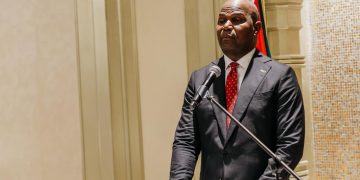
The Government of Mozambique has not yet approved the new conditions imposed by TotalEnergies for the project’s resumption, as confirmed on Tuesday by the Government spokesperson, Inocêncio Impissa.
Speaking at the end of the 36th ordinary session of the Council of Ministers, Impissa told journalists that “the Government is carrying out an in-depth assessment to understand the different nuances regarding how the implementation of the Area 1 project may proceed and (…) it must pronounce itself on the development plan, taking into account this period of suspension.”
The Government spokesperson did not specify when such a pronouncement would be made, but explained that “we have here in Mozambique the representative of Total, who is in contact with the Ministry of Mineral Resources and Energy (…) therefore, when the Government’s position is mature, it will be clear.”
These statements make it evident that the conditions for TotalEnergies to officially resume operations in Afungi have not yet been established, despite the announced lifting of the Force Majeure. The issue at hand is that Total is demanding the Government’s approval of new project terms, which, among other aspects, include an increase of USD 4.5 billion above the previously approved cost, as well as a new schedule extending the project timeline by 10 years.
According to the letter from TotalEnergies addressed to the President of the Republic, seen by MOZTIMES, the concessionaire submitted these conditions to the Ministry of Mineral Resources and Energy on 2 October 2024 and has since been awaiting the Government’s response.
“The Mozambique LNG Concessionaire looks forward to receiving approval by the Government of Mozambique of the revised project cost and schedule, as submitted to the Ministry of Energy on 2 October 2024. The approval of this revised budget should cover the additional costs incurred by the project due to the Force Majeure, amounting to 4.5 billion dollars, on which the Government has conducted an audit for the years 2021 to 2024, whose report the Concessionaire expects to receive as soon as possible,” reads the letter.
TotalEnergies also informed President Chapo that “the updated schedule indicates that the target date for the first cargo from Train 1, initially planned for July 2024, has been revised to the first half of 2029, and that the completion of the two liquefaction trains, initially planned for March 2025, is now expected by the end of 2029.”
For the lifting of the force majeure to become effective, the Government must approve this new schedule and cost submitted by TotalEnergies, which has not yet occurred.
All this makes it clear that the main reason for the delay in the effective resumption of the Mozambique LNG project is no longer the security situation related to terrorism in the region. TotalEnergies halted its activities in March 2021 following the major terrorist attack on Palma town, but security conditions in areas near the project have long improved thanks to the deployment of thousands of Rwandan troops to the region, under bilateral agreements between the two governments. The obstacle now lies in the lack of understanding between TotalEnergies and the Government over the new costs and schedule.
The leak of TotalEnergies' letter addressed to President Chapo, containing details of the parties' discussions, angered the Government of Maputo and may make negotiations even more difficult. The Government spokesperson told journalists in Maputo on Tuesday that “the first thing we do is repudiate this format” of communication. “The most appropriate format is to discuss matters through the channels duly established for that purpose,” he added. (MT)