

- In 2022 and 2023, insurance companies paid a total of nine million US dollars to the Mozambican government, to compensate for damage caused by natural disasters
By Aurélio Muianga
Maputo (MOZTIMES) – The World Bank has paid an annual sovereign insurance premium, which will allow the Mozambican government to receive millions of dollars in compensation to recover from damage caused by extreme climatic events, in the rainy and cyclone season that begins in October.
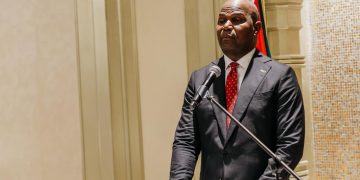
Xavier Chavane, of the Disaster Risk Management sector in the World Bank office in Mozambique, confirmed that this international financial institution has already paid the total sum of the annual sovereign insurance premium, which is four million US dollars.
Sign in to read more
The consortium of insurance companies which will cover the damage caused by natural disasters in Mozambique, in the period from October 2024 to April 2025, consists of EMOSE, the Mozambican insurance company controlled by the Mozambican government, Hollard, the largest private insurance group in South Africa, and the Portuguese-Mozambican company Fidelidade Ímpar.
The compensation to be paid to the Mozambican government could reach a maximum of 38 million dollars, if the country is hit by a major natural disaster, on the scale of Cyclone Idai (which hit Mozambique in 2019), according to George Mathonsi, a representative of the consortium formed by Aires Seguros and Pula, which is advising the Mozambicann government on the implementation of sovereign insurance.
This is the third consecutive year in which the World Bank has paid the sovereign insurance premium to cover the risks caused by cyclones and rains in Mozambique. The country is affected cyclically by natural disasters, including cyclones and floods, with devastating effects on households and on the economy.
Tropical cyclone Freddy, the last large scale cyclone to hit Mozambique (between February and March 2023), affected ten of the country’s 11 provinces, with an impact on more than 1.18 million people. It displaced almost 192,000 people and caused the deaths of 183 others, in addition to the destruction of thousands of houses and public infrastructures.
Mozambique created its sovereign insurance in 2022, to help compensate for the damage caused by natural disasters. Since then, the World Bank has paid an annual insurance premium of four million US dollars, running to a total of 12 million dollars between 2022 and 2024.
As a result, the Mozambican government received monetary compensation which reached nine million dollars in the first two years of the insurance. We have yet to see how much it may receive after the passage of the 2024/25 rainy and cyclone season.
“In the period 2022/23 [the first year of implementation of disaster insurance] the Mozambican government received compensation of 58.3 million meticais from the consortium of insurance companies formed by EMOSE and Hollard Seguros”, said Mathonsi, in an interview. “In the second year of insurance (2023/24), the consortium of insurance companies formed by Aris Seguros and Pula (of Kenya) compensated the government with 526.4 million meticais”, he added.
The value of the compensation is directly proportional to the damage caused by the disasters. This, if an extreme climatic event, categorised as level 10, the highest in the scale defined in the insurance policy, occurs, the Mozambican government will be compensated with a maximum of 38 million dollars, about ten times the value of the premium.
The maximum compensation sum is very little to repair the damage caused by an extreme climatic event, such as tropical cyclone Idai, which hit Mozambique in March 2019, affecting more than 1.85 million people and causing more than 500 deaths. But it is better than nothing.
According to Mathonsi, the insurance contract between the Government and the World Bank determines that 80% of the compensation covers the risk of tropical cyclones, and 20% is intended to cover rainfall. The decision to allocate a greater percentage of the insurance compensation to cover tropical cyclones was taken bearing in mind the frequency of these phenomena, such as the cases of Idai and Freddy, which have a major impact.
The creation of disaster insurance in Mozambique resulted from a study made by the African Risk View (ARC), an insurance agency of the African Union (AU), together with a Technical Working Group, consisting of staff from Mozambican government agencies, namely the National Disaster Risk Reduction and Managment Institute (IND), the National Meteorology Institute, the Ministry of Public Works and Housing and the Eduardo Mondlane University. (AM)