






- Secretary-General of PODEMOS reports the assassination of more than 100 party members and supporters... two months later
By Ricardo Dias
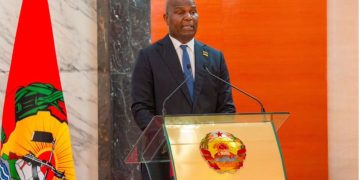
Maputo (MOZTIMES) – Last Saturday, Sebastião Mussanhane, Secretary-General and head of the parliamentary group of the main opposition party, PODEMOS, reported the murders of 106 members and supporters of his party in the context of Mozambique's post-election crisis.
The revelation came to light approximately two months after the executions began. Sociologist João Feijó believes the delay by PODEMOS in denouncing the persecution and assassinations stems from the fact that the victims are not necessarily party members but rather supporters of Venâncio Mondlane.
Mussanhane described the killings as an attempt to silence and eliminate all those identified as leaders of the protests that have been taking place in the country since 9 October.
“These are executions that rob us of our sleep because it is a selective phenomenon, and the people being targeted are carefully chosen,” Mussanhane stated. “Some are found during their activities, others in moments of leisure, and there are those who are kidnapped,” he added during a press conference.
The assassination of opposition members is a recurrent practice in the context of post-election conflicts in Mozambique. In the past, the victims were members and supporters of Renamo, the then-largest opposition party.
The first notable PODEMOS members to be assassinated during the post-election crisis were Elvino Dias and Paulo Guambe, who were Venâncio Mondlane’s lawyer and the PODEMOS election agent, respectively. They were shot dead in central Maputo on 19 October. Since then, the murders have not ceased, though they have been underreported.
MOZTIMES has reported at least eight shootings up to early January in the provinces of Zambézia, Nampula, and Cabo Delgado. However, PODEMOS did not promptly report the killings of its members and supporters.
Sociologist João Feijó argues that the PODEMOS leadership remained silent for so long because those being persecuted and assassinated were not necessarily PODEMOS members but supporters of Venâncio Mondlane.
“They are Venâncio’s supporters who came from Renamo or elsewhere but joined the borrowed bandwagon of PODEMOS,” said Feijó, referring to the leaders of the protests who are being targeted. “They are doing this for Venâncio. They use PODEMOS’s name because it is the party that was made available for Venâncio to run,” the sociologist explained to MOZTIMES.
Feijó classifies the assassination of Mondlane’s supporters as “state terrorism” and elaborates: “According to my sources, in Montepuez, there was a meeting between 27 and 28 December of the Association of Veterans of the National Liberation Struggle (ACLLN) with members of the Local Force (a militia fighting terrorism with state support) at the height of the protests. The instruction given by ACLLN to the Local Force was to shoot directly at the protesters and no longer into the air,” the researcher recounted.
On the night of Friday, 3 January, a week after the alleged ACLLN meeting, Abdul Lawia, the district head of mobilisation for PODEMOS in Montepuez District, was shot dead by individuals who, according to witnesses, were dressed in the militia uniforms of the Local Force.
“So, there is a militia controlled by a political party (FRELIMO) with weapons, bullets, and state-provided subsidies that is assassinating individuals for political motives. Therefore, a political party has an armed militia to eliminate the opposition. This is horrifying,” Feijó concluded. (RD)