







- Eleven people were abducted and around 3,000 have been displaced.
- Movement between Marrupa and Mecula was restored on Saturday.
By Suizane Rafael, in Lichinga
Lichinga (MOZTIMES) – An attack by Islamic State-backed insurgents in Marangira, in the buffer zone of the Niassa Special Reserve in Marrupa district, left one person dead, caused widespread destruction and forced thousands of people to flee, Niassa Province Secretary of State Silva Livone said on Friday night.
The attack, which took place on Thursday, had been planned by the insurgents for more than two months, since they began moving westwards from Cabo Delgado. Although this movement had been reported in advance, the Defence and Security Forces (FDS) were unable to prevent the attack. The vastness of the territory and the limited presence of security forces on the ground make this type of attack almost inevitable.
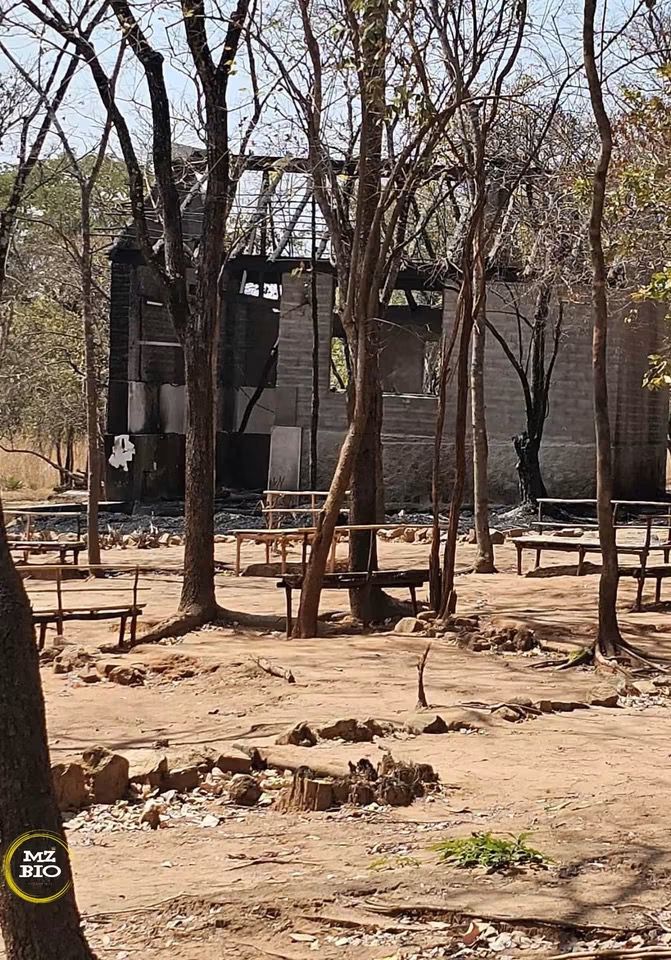
During the attack, the insurgents killed a woman, wounded a member of the Defence and Security Forces, completely destroyed the Mozambique Wild Adventures (MWA) tourist camp, set fire to a health centre, a police post and a mobile phone mast, and abducted 11 people, some of them children.
By Saturday, at least 2,700 people had fled to the neighbouring village of Priringilane, around 20 kilometres from Marrupa town.
Niassa Province Secretary of State Silva Livone said that the insurgents’ movement towards Niassa had been monitored for three months, but they managed to enter Marrupa district undetected and carry out the attack in Marangira.
Nothing at the MWA camp was spared. Several tourists were at the camp when the attack occurred, including three US citizens, who were evacuated by air, Livone said. The three rescued US citizens were taken out of Niassa in an operation coordinated between the Government of Mozambique and the United States Embassy in Mozambique. The tourists were in Marangira for sport hunting, one of the most sought-after tourist activities in Niassa.
The Secretary of State also said that the displaced people were receiving food assistance and other forms of support from the National Institute for Disaster Management (INGD).
The intervention of Mozambican Defence Forces stationed in Niassa prevented the insurgents from causing further destruction.
On Saturday, the Police spokesperson in Niassa, Osvaldo Damião Mahando, said that the movement of people and goods between Marrupa and Mecula districts had been restored. Marangira lies halfway along the road linking the two districts.
Mahando also said that, despite the relative calm, the situation remained tense in Marrupa because of the insurgents’ modus operandi. They hide in the forests before carrying out surprise attacks.
“The terrorists looted food supplies, as they had done in previous attacks”, the police spokesperson said.
Marangira is located 45 kilometres north of Marrupa town and around 300 kilometres east of the provincial capital, Lichinga.
The locality forms part of the buffer zone of the Niassa Special Reserve, where insurgents entered and set fire to tourist facilities in 2021 and 2025.
The Mozambique Wild Adventures facility in Marangira was the main local source of private-sector employment and was established in 2006 by Portuguese football coach Carlos Queiroz.
This is the third time that the insurgents, who have been active in Cabo Delgado since 2017, have carried out successful attacks in the neighbouring province of Niassa. In November 2021, the insurgents attacked the Luchenguwe neighbourhood in Mecula town and the Mariri tourist facility, located 80 kilometres east of the town.
In April 2025, the same groups attacked Kambako Safaris and subsequently Mariri Camp. The first facility is located on the right bank of the Lugenda River and the second on the left bank, both within the Niassa Special Reserve.
The risk of the insurgents attacking Niassa again, as they have regularly done in Nampula and in districts in central and southern Cabo Delgado, is high. The concentration of the Defence and Security Forces in the northern districts of Cabo Delgado to protect gas projects is one of the factors increasing other regions’ vulnerability to attacks. (SR)