






- The Supreme Court used opaque criteria to choose which media outlets would be granted access to the courtroom
- Influential weeklies SAVANA and Canal de Moçambique were initially excluded but gained access after lobbying the Supreme Court
By Ricardo Dias
Maputo (MOZTIMES) – The Supreme Court (TS) hand-picked the media outlets granted access to the courtroom where opposition leader Venâncio Mondlane will be tried. Using opaque criteria, the TS granted the privilege to 11 media outlets, including all those controlled by the government (Rádio Moçambique, Televisão de Moçambique, Notícias, Diário de Moçambique and Agência de Informação de Moçambique).
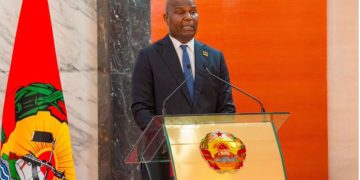
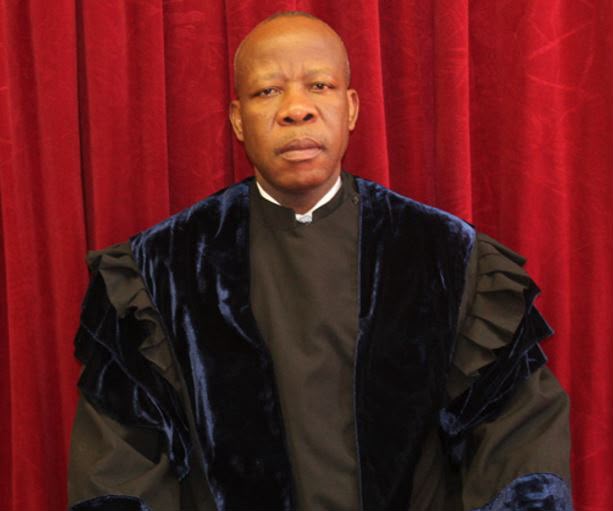
At a press conference held in Maputo last Friday, Supreme Court judge Pedro Nhatitima said that the 11 media outlets granted the privilege of access to the courtroom had been selected based on audience figures. However, he did not say whether any audience research had been conducted to establish whether these outlets do indeed have the largest audiences in Mozambique.
More serious still is that the weekly newspapers SAVANA and Canal de Moçambique, which are generally critical of the government, were initially excluded from covering Venâncio Mondlane’s trial, allegedly because they did not have large audiences. However, representatives of the newspapers lobbied the Supreme Court, which eventually guaranteed them reserved seats in the courtroom, revealing that the criterion used to select the media outlets entitled to cover the trial is based more on influence than on audience figures.
The TS also granted reserved seats in the courtroom to two civil society organisations that have traditionally scrutinised governance, the Centre for Public Integrity (CIP) and the Centre for Democracy and Human Rights (CDD). However, it left out, for example, the DECIDE Platform, which has led the monitoring of post-election violence, the very issue at the heart of the trial.
Other media outlets that will have privileged access to the courtroom for the opposition leader’s trial include the private television channels STV, Miramar and TV Sucesso, as well as the Portuguese media outlets Rádio e Televisão Portuguesa (RTP) and the Portuguese news agency Lusa.
All other media outlets operating in Mozambique will have to compete for four places made available via a link. Mozambique’s Information Office (GABINFO), the government agency that licenses media outlets in Mozambique, estimates that there are around 1,200 media outlets in Mozambique, including newspapers, magazines, television channels and radio stations. GABINFO itself publishes a ‘newspaper’ called Jornal Moçambique and has a reserved seat in the courtroom.
Trial without a public broadcast
This is the first time that an opposition leader — the presidential candidate who received the most votes after the winning candidate — has been tried in Mozambique for political crimes committed in the course of their political activities. Since multiparty elections were introduced in Mozambique in 1994, all opposition leaders had been from Renamo, namely Afonso Dhlakama (1994 to 2014) and Ossufo Momade (2019). Although there was post-election violence on several occasions, neither Dhlakama nor Ossufo Momade was ever tried, most likely because Renamo had a military wing that always threatened to resort to armed violence to assert itself politically.
Venâncio Mondlane, who left Renamo in 2024 to run in that year’s presidential election, has no weapons but enjoys broad popular support, particularly among young people, which means there is a risk of demonstrations during the trial. In these circumstances, the TS refused to allow the trial to be broadcast live, possibly to prevent the public from following the proceedings live. Other high-profile trials in Mozambique have been broadcast live.
The Supreme Court will only allow photographs and video footage to be taken in the minutes before the hearing and during the reading of the Public Prosecution Service’s charges, the presentation of Venâncio Mondlane’s defence and the reading of the judgement.
The court will comprise five judges from the criminal division of the TS, two deputy prosecutors-general, an assistant to the prosecution and two lawyers for the defendant. Witnesses for the prosecution, the assistant to the prosecution and the defence will also take part, along with two experts from the mobile phone operators Vodacom and Tmcel.
Mondlane is being tried by the Supreme Court because he is a member of the Council of State, a position he holds by virtue of having placed second in the 2024 presidential election, which national and international observers described as highly fraudulent.
European Union support
Venâncio Mondlane’s trial will be the first to use a modern court recording system — which captures audio and video and generates an automatic transcript — that, according to the Supreme Court spokesperson, was donated by the European Union, which also funds the Inclusive National Dialogue.
‘This is the first system we are putting into use that will shorten trial hearings. At least, we do not expect them to take any longer than necessary. A lot of time is lost preparing the minutes and correcting errors. We will see a significant reduction in the time taken,’ said Pedro Nhatitima.
The Supreme Court is presenting the use of software donated by the European Union as a sign of support for the opposition leader’s trial. Meanwhile, through its Election Observation Mission in Mozambique, the European Union was among the organisations that did most to expose electoral fraud in the 2024 elections, pointing in particular to unjustified changes to the results that handed victory to Frelimo’s presidential candidate, Daniel Chapo, and to Frelimo in the legislative and provincial elections.
Tight security measures
During the opposition leader’s trial, movement around the perimeter of the Supreme Court will be strictly restricted. Vehicles and unauthorised pedestrians will be barred from the stretch of Vladimir Lenine in front of the Supreme Court and the Office of the Prosecutor-General (PGR).
The authorities fear that Venâncio Mondlane’s supporters may remain near the court to show their support for the opposition leader, as they did on the days when Mondlane went to the PGR to be heard in connection with the case.
The criminal case against the opposition leader was brought by the Public Prosecution Service following the post-election demonstrations between October 2024 and March 2025.
The mass protests were called by Venâncio Mondlane after he refused to recognise the official results of the highly contested national elections of 9 October 2024, which handed victory to Daniel Chapo, Frelimo’s candidate. The murder of Mondlane’s lawyer, Elvino Dias, ten days after the elections, led the opposition leader to flee the country and call for public protests through Facebook livestreams from a hideout.
Mondlane is charged with five offences, including incitement to terrorism. If he is convicted, the offences could result in a combined prison sentence of more than 20 years and prevent him from standing in the 2029 presidential election.
Mondlane denies all the charges against him and describes the trial as political persecution through the courts. (RD)