








By MOZTIMES
Maputo (MOZTIMES) – In a pastoral letter issued on 13 May, the Mozambican Episcopal Conference raised its tone and demanded that the government “take a courageous decision to bring an immediate end to religious intolerance, which manifests itself in the form of hatred against Christians.”
The letter was issued in the context of the current incursion by jihadist insurgents into the southern districts of Cabo Delgado province, where civilians are being killed and churches set ablaze.
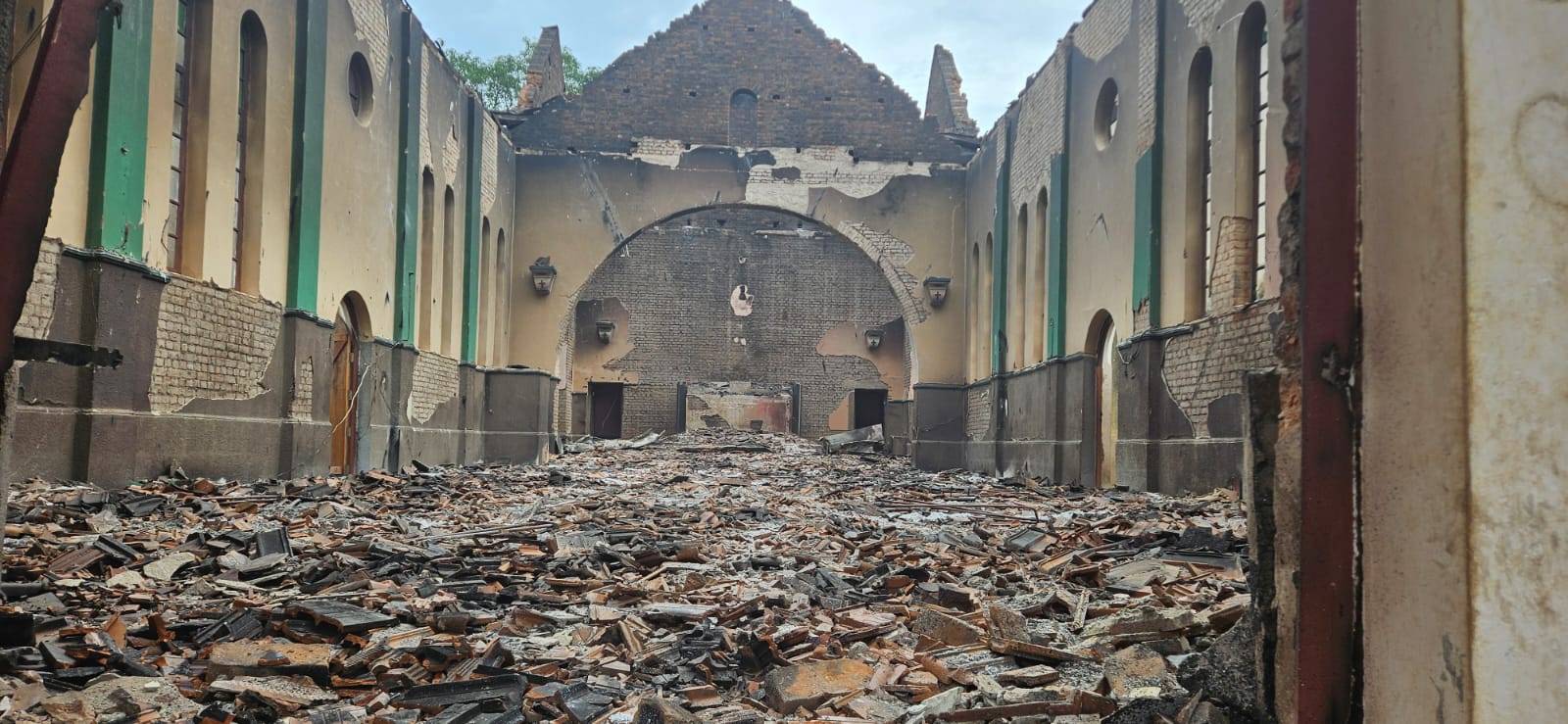
In one of the most recent attacks, in Ancuabe district, the insurgents burned down a historic Catholic Church building, vandalised the tabernacle and scattered communion hosts across the floor, in what is regarded as a profanation of the Catholic faith.
Read also: Islamist Insurgents Kill and Burn Villages in Ancuabe in New Incursion Into Southern Cabo Delgado
The Episcopal Conference, the governing body of the Catholic Church in Mozambique, reacted to the situation by warning that it could “create a precedent for the emergence of other dangerous forms of radicalism”.
The letter from Mozambique’s Catholic bishops was signed by the Archbishop of Nampula, Dom Inácio Saure, in his capacity as President of the Mozambican Episcopal Conference. Nampula is one of the provinces affected by insurgent attacks. A few years ago, an Italian nun, Sister Maria De Coppi, was killed by jihadist insurgents in Eráti district, also in that province.
The Catholic Church, the largest religious congregation in Mozambique in terms of number of followers, has maintained a position of religious tolerance, even in the face of attacks by jihadists against Christian communities and churches.
In the letter issued this week, the Catholic bishops refer to the “instrumentalisation of religion to justify violence” and address the government directly, demanding that it put an end to the violence.
“We remind [the authorities] that it is the fundamental duty of the government to guarantee human dignity, security and the well-being of all, protecting life and national property, aspects that are being gravely undermined in Cabo Delgado,” the letter reads.
The most recent attacks in southern Cabo Delgado have caused at least 12,000 internally displaced people, forced to flee their homes in Ancuabe district between 1 and 10 May, according to data released by the International Organization for Migration (IOM). Most of the displaced are children, who account for 49 per cent of the total.
“Our concern and compassion are directed particularly towards displaced families, traumatised and deprived of a future. Despair, discouragement, suffering, hatred and death never have the final word. The final word always belongs to hope, reconciliation and life,” the bishops continued.
The southern region of Cabo Delgado is predominantly inhabited by populations from the Makuwa ethnic group, most of them Christians, while the coastal areas are predominantly inhabited by Mwani-speaking populations, who are mostly Muslim.
Although they also operate in coastal areas, the jihadist insurgents have become increasingly violent against Christian communities, burning entire villages and destroying churches. The Islamic State terrorist organisation boasts that the attacks are directed against Christians and their property.
“We reaffirm our closeness, spiritual support and human and material solidarity with all victims of violence in Cabo Delgado, regardless of their religion, ethnicity or social background,” the Catholic bishops’ statement says, avoiding emphasis on the ethnic or religious dimensions of the war.
On Wednesday, the insurgents attacked the village of Nanivichi and burned dozens of houses. The village is located around 30 kilometres from the headquarters of the Katapua administrative post and about 60 kilometres from the Chiure district capital. (MT)