




- Increasing the government’s free-carried shareholding in mining and petroleum concessions forms part of the strategy.
By MOZTIMES
Maputo (MOZTIMES) – President Daniel Chapo said he wants to turn Mozambique’s mineral and energy wealth into the main driver of the “economic independence” he has defined as the country’s major national project for the next 50 years.
To achieve this, Chapo is calling for greater state participation in extractive projects, increased local processing and a reduction in raw-material exports.
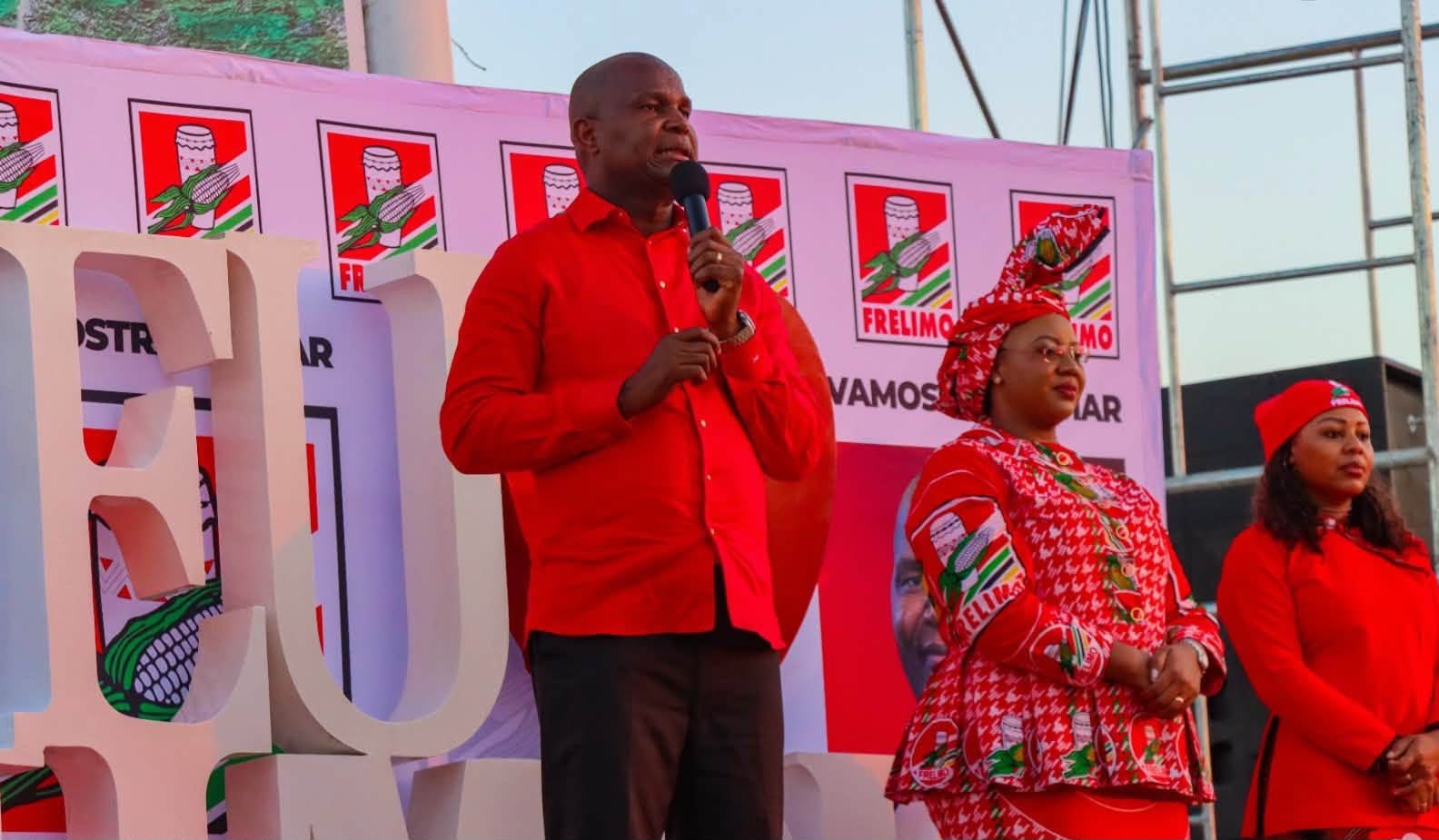
“If the first 50 years were marked by the achievement and consolidation of political independence, the next 50 years must be devoted to achieving economic independence”, Chapo said on Friday at the opening session of the 11th National Conference of FRELIMO Cadres, in Chimoio. “This is the defining generational challenge of our time”, he added.
The new agenda places natural resources at the centre of the Government’s economic strategy. Mozambique has significant reserves of natural gas, coal, graphite, rubies, heavy mineral sands, gold and other strategic minerals, but Chapo argues that the exploitation of these resources must generate far greater value within the country.
“Economic independence means having the capacity to reduce excessive dependence on the export of raw materials, foreign aid and permanent borrowing”, he said.
For the President, the objective is not to drive away foreign investors but to change how foreign capital participates in the Mozambican economy.
“Lets us be clear: the economic independence we seek as a nation does not mean isolating Mozambique”, he said. “Nor does economic independence mean rejecting international cooperation, foreign aid or foreign investment”, de added.
The issue, according to Chapo, is to ensure that a greater share of the wealth generated by natural resources remains in Mozambique.
“When we speak of economic independence, we mean the ability of our country to participate actively in the global economy from a position of asserting its economic sovereignty, with confidence and freedom”, Chapo said.
State seeks at least 15% stake in mining and petroleum projects
The reform of Mining and Petroleum Laws completed this year guarantees the State a free carried interest in future mining and petroleum concessions.
“It was within this framework that we undertook a thorough review of the mining and petroleum legislation, ensuring that the State has a free, non-dilutable participation of at least 15% in all mining and petroleum ventures”, Chapo said.
But the President indicated that 15% may not be the ceiling for national participation.
“But, comrades, this is only the beginning. We will have to increase this national participation as projects mature, as is the case in other jurisdictions, for the benefit of the nation and the Mozambican people”.
Chapo justified the policy on the basis of state ownership of the country’s natural resources.
“It makes no sense that, since the natural resources of Mozambique’s land, subsoil and exclusive economic zone have been the property of the State since independence on 25 June 1975, the State’s participation in projects should be conditional on the contribution of capital or benefit an individual or group of individuals. These resources must benefit the Mozambican people and all of us as Mozambicans" President Chapo stressed.
According to the President, the policy is expected to lead to the “Mozambicanisation of the economy”.
The strategy goes beyond the State’s equity participation. Chapo wants Mozambique to move away from merely extracting and exporting resources and instead develop processing and production chains within the country.
“It is imperative that an increasing share of these natural resources be processed in Mozambique, rather than exported in raw form while generating jobs and wealth in other countries,” he said.
Under this model, mining, gas, agriculture and fisheries would feed into a national industry capable of adding value to domestic production.
“Economic independence is achieved when the primary sectors of the economy, such as agriculture, fisheries and mining, supply the national industry, and when that same industry adds value to national production,” Chapo said.
The transformation should also increase public revenues, according to the President.
“Economic independence, comrades, means achieving national food self-sufficiency based on what we produce and putting an end to hunger among the Mozambican people,” he said.
“It means more revenue for the Treasury from the exploitation of our gold, our coal, our gas, our rubies, our heavy mineral sands, our graphite and all the strategic resources found in our country, which belong to all Mozambicans.”
Chapo acknowledged, however, that possessing natural resources does not automatically create wealth.
“But potential, in itself, does not constitute wealth, comrades,” he said, adding that “the challenge now is to turn this potential into tangible results, to turn resources into production through investment in industrialisation, to turn industry into employment, to turn employment into income for Mozambican families, and to turn income into well-being for Mozambican families”.
The extractive agenda is being put forward at a time of significant government financing needs and still limited economic growth. Chapo argues, however, that greater economic exploitation of national resources should, precisely, help reduce this dependence.
The ambition is to build a broader foundation for domestic production from natural resources, rather than relying solely on export revenues.
“This is our vision,” he said, advocating for an economy in which “knowledge generates innovation”, and economic growth translates into improved living conditions.
The issue of public debt makes this challenge even more complex. With limited fiscal space and high financing needs for infrastructure, public services and productive development, Mozambique remains dependent on external resources to implement a significant part of its economic agenda.
The country needs to build domestic capacity to finance its own development and turn future revenues from natural resources into sustainable investment.
Foreign investment, meanwhile, will remain indispensable, particularly in the gas, mining, energy and infrastructure sectors, where the country needs capital, technology and specialised expertise. The real test will be whether this foreign capital helps Mozambique build a more diversified and productive economy, or remains concentrated in the exploitation of resources destined for export. (MT)