







By MOZTIMES
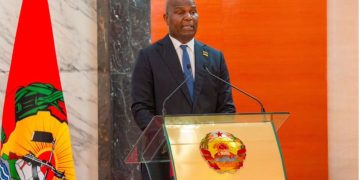
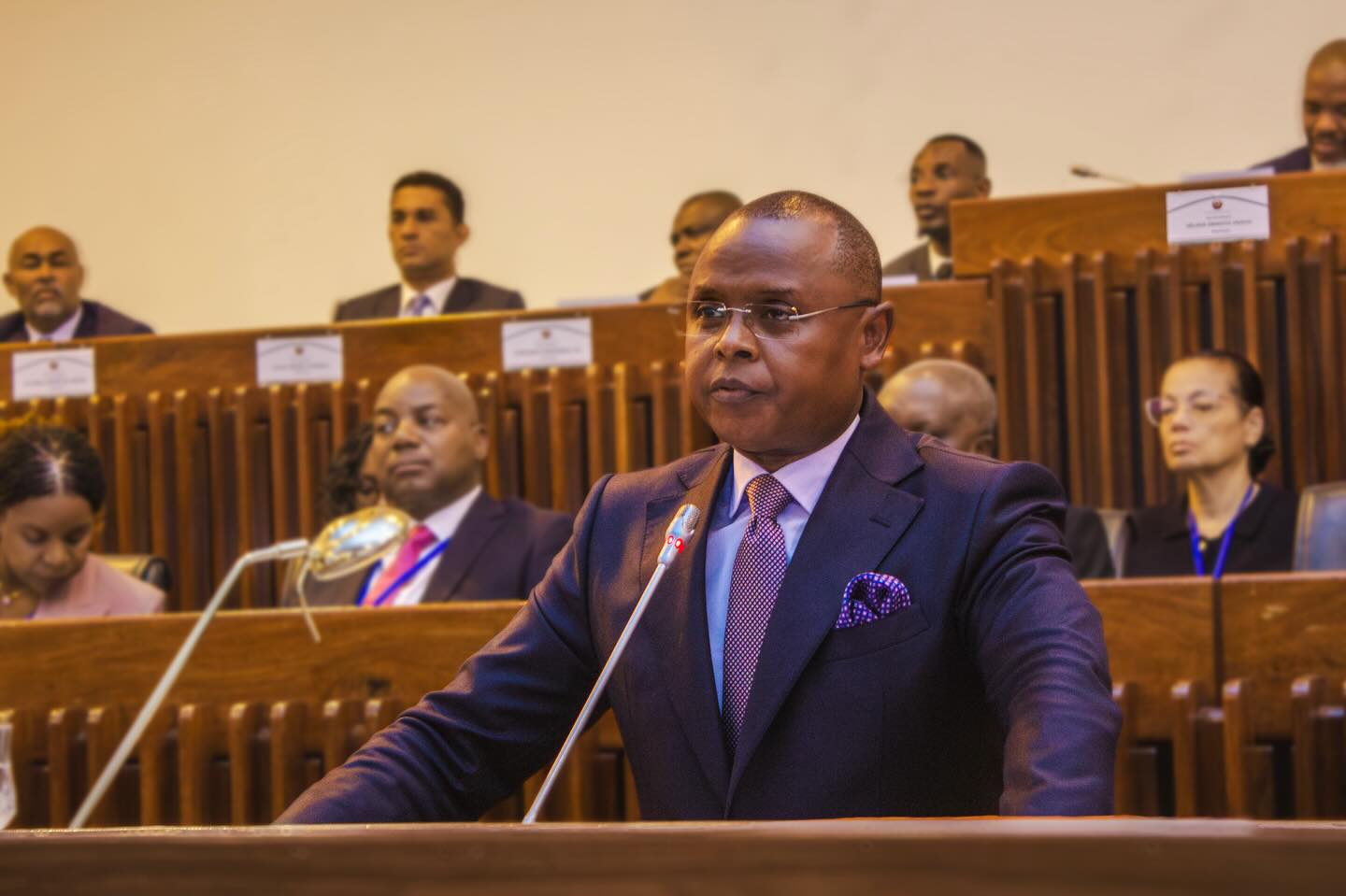
Maputo (MOZTIMES) – Mozambique’s Attorney-General, Américo Letela, on Wednesday presented his annual report on the state of the justice system to the country’s parliament, the Assembly of the Republic.
The Report, covering 2025, warned that corruption has become deep rooted. “Corruption in its many forms and expressions is today a widely recognised reality”, said Letela. “It is not an isolated or residual phenomenon, restricted to only certain sectors”.
Letela warned that “the normalisation of corruption generates a culture of tolerating what is illicit, in which corruption comes to be viewed as a legitimate means for achieving individual goals”.
In 2025, 1,371 cases of corruption were begun, but resulted in only 166 detentions, with the state suffering losses estimated at 2.9 billion meticais. Some of the major, and highly publicised cases, such as the detentions of senior officials of the National Social Security Institute (INSS) and of Mozambique Airlines (LAM) are still at a preparatory phase.
However, attempts to seize illicitly acquired assets from criminal hands, appear to have gone backwards. The amount recovered fell from 4.4 billion meticais in 2024 to only 450 million meticais in 2025. Letela called on the Assembly to pass “a civil confiscation law to take from the criminals the proceeds of their illicit activity, even in cases where they have not yet been sentenced”.
In the area of security, the report points to the worsening of “complex threats”. 32 cases of terrorism were recorded (an increase of 23.1 per cent on the 2024 figure), and 21 cases of the financing of terrorism.
Letela pointed in particular to the 14 year sentence given to a woman convicted of supplying terrorists in Mocímboa da Praia, in Cabo Delgado province. But he noted that there are no mechanisms to “deradicalise” islamists, and called for the establishment of a specialist centre for this task.
Letela was concerned at links between illegal mining and other forms of organised crime.
There had been a 14.1 per cent increase in environmental crimes, particularly in the central province of Manica where gold mining had polluted major rivers.
“We have instructed the National Institute of Mines to take urgent measures”, said Letela. “Illegal mining has been on the rise, and might establish connections with other forms of organised crime, including the financing of extremist activities”.
A success story was the reduction in the number of kidnappings by 33 per cent, falling from 15 cases in 2024 to 10 in 2025. “The use of specialist techniques in gathering proof has played a central role”, said Letela.
But the number of cases of human trafficking rose from six to 64. One notorious case was that of 23 Mozambicans who were enticed with the promise of jobs in Laos. But when they reached Laos they found that there were no real jobs – just forced labour without payment.
The authorities worked to rescue the Mozambicans, who were eventually repatriated. (MT)