





- REVIMO’s lawyer sought to introduce material outside the scope of the charges to incriminate Mondlane
- Judge intervened to restore order
By Ricardo Dias
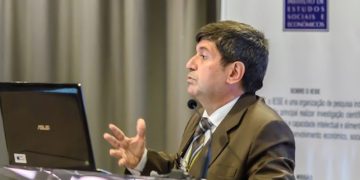
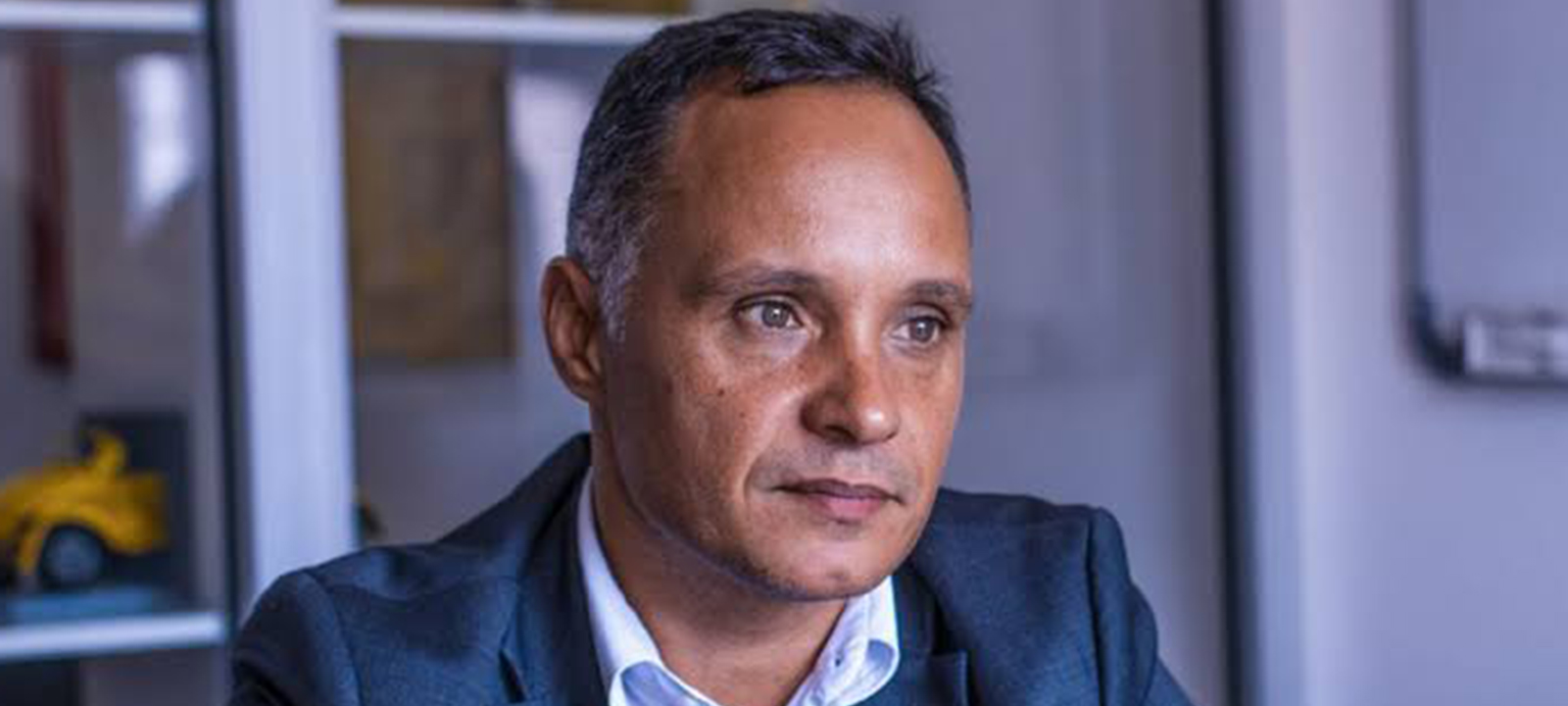
Maputo (MOZTIMES) – The fifth day of Venâncio Mondlane’s trial was marked by an intense and prolonged verbal confrontation between the defendant and Rodrigo Rocha, counsel for Rede Viária de Moçambique (REVIMO), which is acting as an auxiliary prosecutor in the case.
Rocha began his questioning by saying that he had drawn up 125 questions but had condensed them to 30. That is a high number for a single trial session. Even the public prosecution service did not ask that many questions.
During his questioning, Rocha tried to discuss matters outside the scope of the prosecution's charges. The politician responded forcefully, leading to a heated exchange in the courtroom.
Rodrigo Rocha has publicly acknowledged that he supports the ruling party, Frelimo, and takes part in party events, including a recent meeting of party cadres in Chimoio, the capital of Manica province. Mondlane may have seen Rocha’s aggressive approach at the trial as a political confrontation.
Tensions rose as REVIMO’s lawyer and the defendant traded direct accusations. Rodrigo Rocha went so far as to describe the figures for the financial losses caused by the protests as "shameful", while Mondlane demanded that concrete figures be presented. Supreme Court Justice António Namburete intervened to restore order to the proceedings.
Below, we summarise the main exchanges between Rodrigo Rocha and Venâncio Mondlane in question-and-answer form. The account is based on notes taken during the trial session and seeks to reflect their words as closely as possible.
Rodrigo Rocha – In live broadcasts, you said that any politician should weigh their words carefully. To what extent does calling on people to refuse to pay road tolls encourage them to break the law?
Venâncio Mondlane – In the political context at the time, advocating refusal to pay for services simply meant exercising the right to refrain from using those services. Anyone who does not use a service does not pay for it, and there is no crime in that.
Rodrigo Rocha – How do you explain the road blockades and damage to road infrastructure that followed those appeals?
Venâncio Mondlane – Telling people not to pay tolls is one thing. Inciting them to destroy toll barriers or put up barricades is quite another. My intention was always to call for peaceful protest through inaction, the use of placards and opposition to the charges. That worked in 99% of cases. I never gave orders to attack or destroy toll facilities.
Rodrigo Rocha – You referred to telecommunications operators as potential targets of public anger if they cut communications. Were you aware that 59 telecommunications masts were destroyed or put out of service after your statements?
Venâncio Mondlane – I only learnt of those figures today and would like to see the dates and details of those incidents. I never proposed destroying infrastructure. When I warned the operators, I reminded them that by violating the social contract and the people's rights, they were exposing themselves to public outrage. My remarks were intended as a political deterrent and were entirely in keeping with the debate at the time. They were not an order to attack.
Rodrigo Rocha – Do you consider the death of the police officer in Malhampsene an act of terrorism? And was the expression "wipe members of the Defence and Security Forces off the face of the earth" also a metaphor?
Venâncio Mondlane – Any loss of human life is deeply reprehensible. I will not comment on whether the case amounts to terrorism, as that is a technical concept outside my area of expertise. In the case you mentioned, it was an immediate and regrettable public reaction after an officer murdered a child. My statements about the security forces were aimed at stopping the violence by police officers who were killing citizens. It was a communication strategy based on the principle that "violence breeds violence", intended to force an end to the hostilities.
Rodrigo Rocha – When you said "we will create a climate of terror for those thieves, murderers, liars and terrorists", who exactly were you addressing?
Venâncio Mondlane – I was addressing those who carried out the murder of Elvino Dias, who was shot 25 times. To this day, we do not know who those killers are. I used the protests as a legitimate means of exerting political pressure on faceless actors who act with impunity.
Rodrigo Rocha – Are you aware that courthouses were destroyed during the wave of protests? Which body substantiated the theory that third parties were behind these acts or that they were carried out as "false flag" operations?
Venâncio Mondlane – I know that courthouses were damaged, as happened in Gaza. However, there are publicly available images, widely shared on social media, that prove that some of the destruction was carried out by members of the Defence and Security Forces themselves. The aim was to undermine the peaceful nature of the protests and justify the declaration of a state of emergency. None of those who vandalised private property or public buildings were acting in the name of restoring the true election results.
Rodrigo Rocha – What did you mean when you said that Lúcia Ribeiro, the President of the Constitutional Council, "would be burned"?
Venâncio Mondlane – The expression referred to political ostracism and discrediting her in the eyes of the public, not to any act of physically setting her alight. As an interested party in the electoral process, we retain the constitutional right to express opinions and voice strong criticism of institutions without prior authorisation.
The final stage of the confrontation was marked by a series of direct exchanges about the economic impact on the infrastructure operated under concession. After Rodrigo Rocha asked Mondlane whether he felt "ashamed" of the damage caused and the defendant demanded that the figures in the case file be formally presented, the tension prompted Supreme Court Justice António Namburete to interrupt the exchange and restore order.
REVIMO’s lawyer ultimately decided to drop his remaining questions, claiming that the defendant was refusing to answer objectively. The trial continues today with a session set aside for questions from Venâncio Mondlane’s defence team.
Mondlane faces five charges in connection with the 2024–2025 post-election protests, namely public glorification of crime, incitement to collective disobedience, public instigation to commit a crime, instigation of terrorism and incitement to terrorism. (RD)
Editor’s note. — The Mozambique Times (MOZTIMES) was given access to the courtroom at Venâncio Mondlane’s invitation. The Supreme Court hand-picked the media outlets it allowed to cover the trial from inside the courtroom.