


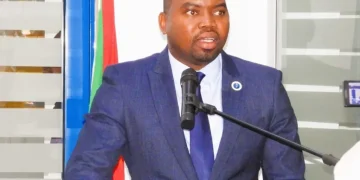


- The Nordic country is among the largest development donors
- The measure affects four other countries, namely Zimbabwe, Tanzania, Liberia and Bolivia
By MOZTIMES
Maputo (MOZTIMES) – The Government of Sweden has decided to withdraw development aid previously channelled to Mozambique and four other developing countries in order to redirect funds to Ukraine.
According to a statement issued on Friday (5) by the Embassy of Sweden in Mozambique, the phasing out of bilateral development cooperation will be gradual and completed by 31 August next year. Political cooperation and humanitarian aid will continue, and the Swedish Embassy in Maputo will remain open (unlike the situation in Zimbabwe, where Sweden is closing its embassy).
Sweden was one of Mozambique’s largest development donors, contributing millions of dollars annually to sectors including energy and climate, health and sexual and reproductive rights, economic and social inclusion, higher education and research, as well as peace and security, Ambassador Andrés Jato stated in a note published on the Embassy’s digital platforms.
Swedish aid to Mozambique has totalled around two billion US dollars since independence in 1975.
Since 2022, with the election of a right-wing Government formed by the Moderate Party, Christian Democrats and Liberals, and which relies on parliamentary support from the far right populist Sweden Democrats, there has been a significant shift in Swedish politics, including cuts to aid for developing countries.
Sweden had already cut assistance to several west African countries, where military juntas have seized power, such as Mali and Burkina Faso, and which are generally regarded as satellites of Russia.
The aid will instead be channelled to reconstruction efforts in Ukraine, which has been devastated by Russia’s military aggression.
“Ukraine is Sweden’s most important priority in terms of foreign and aid policy. Therefore, the Government will increase support to Ukraine to at least 10 billion Swedish crowns (1.06 billion US dollars) in 2026,” declared the Minister for International Development Cooperation and Foreign Trade, Benjamin Dousa, as quoted by international news agencies.
Cuts in Swedish aid should not have been unexpected. For several years, donors who provided Mozambique with direct budget support have warned of the consequences of corruption, yet there was little sign of the government cracking down on corrupt officials.
Sweden has had close ties with Mozambique since the days of the national liberation struggle against Portuguese colonial rule, and there is a street in Maputo named after assassinated Swedish Prime Minister Olof Palme.
Despite a claim made by Andres Jato that the cut in aid has nothing to do with events in Mozambique, it is inconceivable that the Swedish authorities did not react to the scandal of the “hidden debts”, in which three fraudulent, state-owned Mozambican companies, Proindicus, Ematum (Mozambique Tuna Company) and MAM (Mozambique Asset Management) obtained over two billion dollars from the banks Credit Suisse and VTB of Russia, by using illicit guarantees signed by the then finance minister Manuel Chang.
Sweden knows the full details of this scandal since the Swedish government paid for the independent audit of the fake companies, showing how the sole contractor, the Abu Dhabi-based group Privinvest, sold them fishing boats, radar stations and other assets at vastly inflated prices.
As for Ukraine, it will not have escaped European notice that the Mozambican government did not lift a finger against Russian aggression, instead calling for dialogue between the aggressor and his victim. (MT)