




- CIP researcher predicts project resumption could take longer due to the need for contractual adjustments between the parties
- Security in Cabo Delgado has deteriorated following the withdrawal of SAMIM forces, but there are no reports of attacks in the LNG project zone
By MOZTIMES
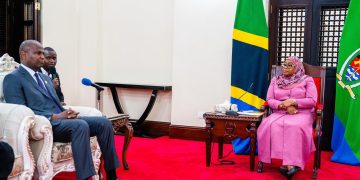
Maputo (MOZTIMES) – President Daniel Chapo has announced a meeting with TotalEnergies CEO Patrick Pouyanné, during which they discussed “the progress and the company’s commitment to the development of the Liquefied Natural Gas (LNG) project in Cabo Delgado.”
According to a post shared by Chapo on his verified page on the X platform (formerly Twitter), Pouyanné reaffirmed TotalEnergies’ dedication to resuming the project, which has been on hold since 2021 due to jihadist attacks in the region.
“For our part, we reiterated the importance of the project for Mozambique’s economic growth, and efforts are being made to ensure the stability necessary for its implementation,” wrote Chapo.
The Mozambique LNG project is regarded as the largest private investment in Sub-Saharan Africa, valued at over 20 billion dollars, aimed at the extraction and processing of natural gas in the Rovuma Basin, off the coast of the northern province of Cabo Delgado. Although the project has been officially suspended since 2021, Rui Mate, a researcher at the Centre for Public Integrity (CIP) and an expert on the extractive industry, revealed that preliminary activities are taking place on-site.
“In 2023, I visited Afungi, the site where part of the project's support infrastructure will be built. In 2024, I returned for a second visit and observed significant progress in infrastructure construction,” Mate stated in an interview. According to him, “this shows that TotalEnergies is waiting for the right moment to officially announce its return, even though security conditions are not yet at the originally required level.”
Security in Cabo Delgado remains volatile, with signs of deterioration since mid-2024 following the withdrawal of the forces of SAMIM (Southern African Development Community Mission). Since then, insurgent attacks have increased, particularly in the coastal region of Macomia and along the main road linking the south to the north of the province, the N380. Jihadist groups aligned with the Islamic State have intensified the use of improvised explosive devices (IEDs), making movement in the region more difficult.
However, the Palma area, where the LNG project is located, has remained stable thanks to the presence of significant contingents of Rwandan military and police units.
“Although the security improvements in Cabo Delgado are acknowledged, stability remains fragile,” warned Mate, stressing that TotalEnergies will likely follow “a rigorous risk assessment before making strategic decisions.”
Mate believes that the meeting between the CEO of TotalEnergies and Mozambique’s newly inaugurated president suggests that “negotiations between the company and the outgoing government were already underway.”
“With the leadership transition in the country – still under FRELIMO – it is likely that new negotiations will be needed to adjust contractual aspects and strengthen the conditions for the project’s resumption,” he added.
According to Mate, these negotiations may delay the project’s restart. “A formal decision is likely to be made this year, but the actual resumption of the project may only occur in 2026, depending not only on improvements in security and logistics but also on contractual adjustments between the parties,” Mate explained.
Despite this, Mate considers the meeting strategically significant, as it reaffirms the commitment of TotalEnergies to the LNG project in Cabo Delgado while also demonstrating the Mozambican government’s determination to stabilise the region and create the necessary conditions for resuming the investment.
“The meeting sends a clear message to international investors that Mozambique is committed to providing a favourable environment for large scale investments, while TotalEnergies is showing its willingness to move forward with the project,” concluded Mate. (MT)