




- Government silence heightens concerns over the protection of human rights defenders and journalists
- Senior researcher at Human Rights Watch advocates for reforms in defence and security.
By Sheila Nhancale and Noémia Mendes
Maputo (MOZTIMES) – The Mozambican government has remained silent regarding an official request by Mary Lawlor, the United Nations Special Rapporteur on the situation of human rights defenders, to visit the country this year.
“I sent an official request to visit Mozambique this year, but so far, I haven’t received a response,” said Mary Lawlor during the conference Post-Election Crisis and Human Rights: The Situation of Human Rights Defenders and Journalists in Mozambique, organised by THE MOZAMBIQUE TIMES (MOZTIMES) last Friday (24 January).
“The purpose of my communications is always to establish a channel for dialogue to help implement international human rights obligations. It is not about criticism but rather an attempt to help create a safer environment for human rights defenders,” Lawlor added.
Since assuming her role in 2020, Lawlor has sent four communications to the Mozambican government, addressing issues such as attacks on human rights defenders, including journalists. The most recent, sent in November 2024, warned of “allegations of human rights violations, including assaults on defenders, particularly in the post-election context,” as the Rapporteur highlighted during the conference.
Lawlor also stressed the Mozambican government’s responsibility to ensure that human rights defenders and journalists can carry out their work without fear of reprisal.
At the same conference, Zenaida Machado, a senior researcher at Human Rights Watch, issued urgent recommendations to the Mozambican government and state institutions. Chief among these was the need to investigate human rights violations that occurred during the post-election protests, regardless of whether they were committed by state or non-state actors.
“It is not enough to say that post-election protests were violent. It is essential to identify those responsible and ensure they are held accountable proportionately,” Machado stressed.
The researcher also underscored the urgent need for reforms in Mozambique’s defence and security sector. “It is vital to establish a more human-centred defence and security force, focused on dialogue and respect for human rights, employing non-lethal methods to manage protests,” she added.
Machado called on journalists to support civil society by documenting the most serious cases and pressuring elected authorities to make public commitments to protect the rights of activists and journalists.
The silence of Mozambique’s government and its failure to respond to requests such as Mary Lawlor’s have raised increasing concerns about the protection of human rights in the country, particularly in a post-election period marked by tension and violence.
The conference, held in partnership with the National Commission for Human Rights (CNDH) and the Mozambican Bar Association (OAM), aimed to assess the impact of the post-election crisis and propose solutions to strengthen the protection of civil rights.
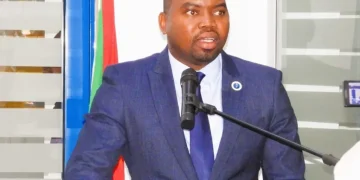
The event, open to the public, also featured the participation of Albachir Macassar, President of the National Human Rights Commission, and Miguel Mussequejua, a human rights adviser from the Mozambican Bar Association.
A panel discussion brought together Wilker Dias, Zito Ossumane, and Strip Pedrito, human rights defenders and journalists who were involved in the elections as observers or reporters. They shared their experiences working in high-risk contexts, including instances of physical and verbal violence, highlighting the challenges faced by professionals in the course of their duties. (SN/NM)