







- The CTA was expecting incentives for the commercial banks for the temporary suspension of loan payments by their clients
- The measures need to be combined and strengthened with the rapid introduction of the Mutual Guarantee Fund
By Aurélio Muianga
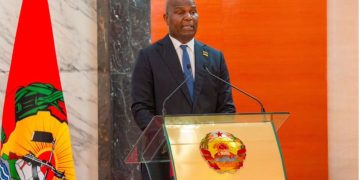
Maputo (MOZTIMES) – The Confederation of Mozambican Business Associations (CTA) believes that the measures announced on Monday by the Monetary Policy Committee of the Bank of Mozambique (CPMO) are insufficient to stimulate recovery of the economy suffocated by the post-election tensions, which, between October and December 2024, resulted in the destruction of public and private property.
Reacting at a Maputo press conference on Tuesday, the business class said it had hoped for more daring measures from the central bank, going beyond a cut in the bank’s benchmark interest rate, and in the Compulsory Reserve coefficients for deposits in meticais and in foreign currency.
The CTA had hoped that the Bank would “signal incentives for the commercial banks to apply moratoria to payments from their clients, in the context of the post-election demonstrations, through temporary relief from prudential requirements, such as the limits for constituting provisions for non-performing loans", said Paulo Oliveira, chairperson of the CTA Communication and Information Services portfolio.
According to the CTA, this would have been an ideal approach to give the commercial banks greater room for manoeuvre to renegotiate the terms for payment of the loans granted to the companies affected.
A further expectation was “the temporary resumption of making foreign exchange available on the market, equal, for example, to 50% of the fuel import invoices”, said Oliveira, for whom the error of the Central Bank’s measures was that they were too conservative.
The Bank of Mozambique had claimed that there is a high degree of liquidity on the market, but the CTA noted that “on the Interbank Exchange Market, liquidity remans low and with limited sources. Even so, the Bank of Mozambique has sucked foreign exchange from the market, through the Compulsory Reserves”.
Furthermore, the central bank had sucked out about 286 million dollars through purchases of foreign exchange on the market. The CTA claimed that, in total, the Bank of Mozambique drained from the market about 2.1 billion dollars in 2024 to feed the country’s international reserves. It recalled that, in June 2024, the CTA estimated unmet import needs at 410 million dollars.
For the CTA, the foreign currency liquidity constraints could affect the import of equipment and accessories for the companies affected by the post-election rioting and looting, thus delaying their resumption of productive activities.
The businesses note that “the main protest of companies is that they have been excluded from financing by the commercial banks who prefer to put the money into Treasury Bills". The CTA stressed that “the measures need to be combined and strengthened with the rapid introduction of the Mutual Guarantee Fund, and, in the medium to long term, with reforms in the monetary policy framework” .
The CTA suggests the introduction of incentives through monetary policy, so that the banks finance the primary and secondary sectors, notably Agriculture and Manufacturing Industry. (AM)