




- South African energy giant has made billions from a two-decade gas project, while communities that gave their consent say they were misled
By Noémia Mendes and Paulino Vilanculo
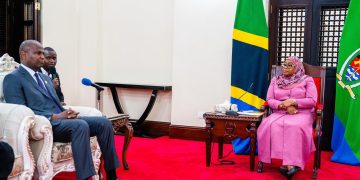
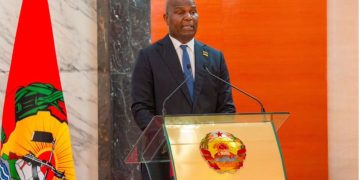
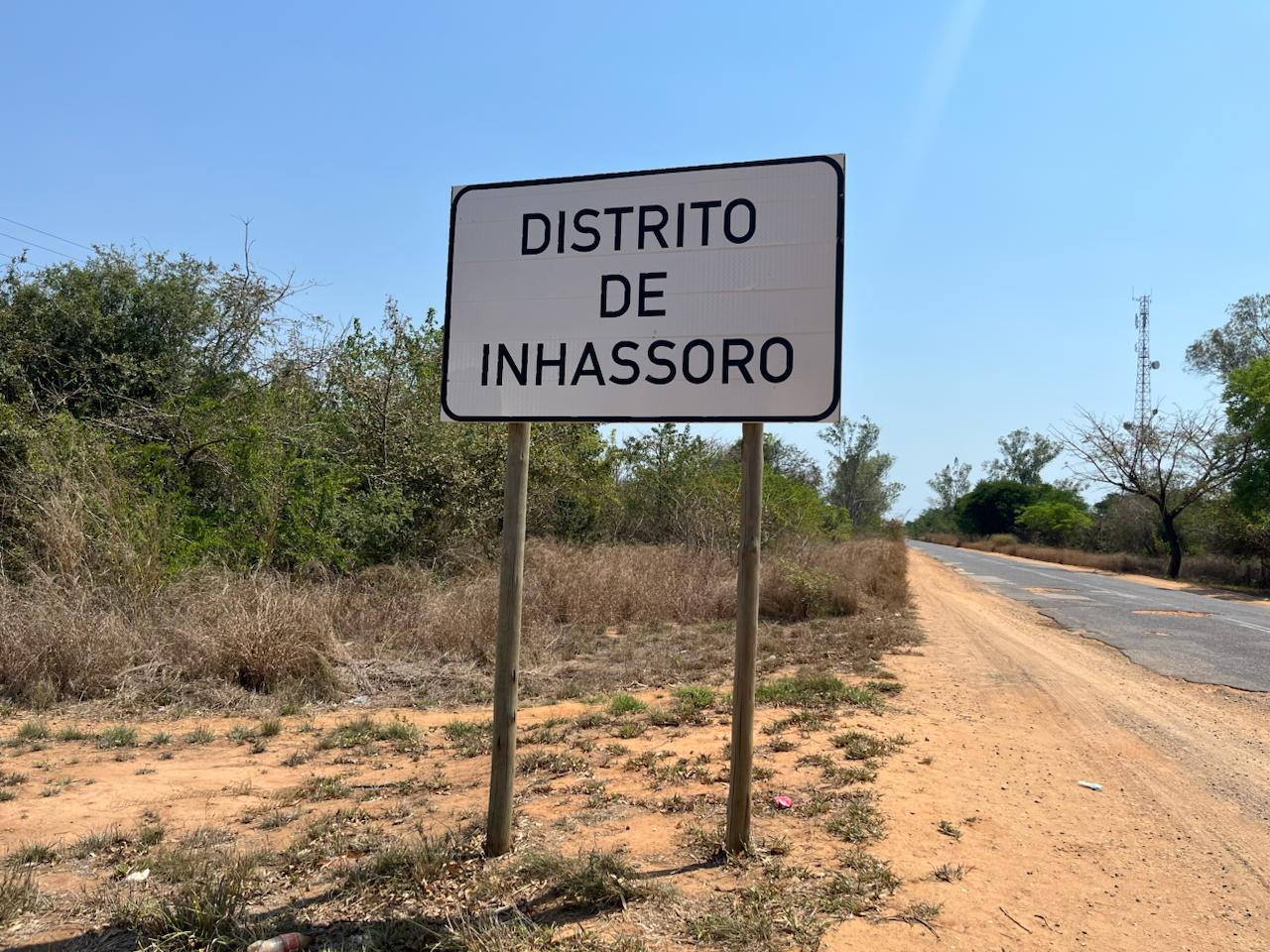
Vilankulo (MOZTIMES) - In December, the quiet rural town of Inhassoro in southern Mozambique rolled out the red carpet for the country’s president, Daniel Chapo, and his South African counterpart, Cyril Ramaphosa.
They were announcing the launch of a billion-dollar gas project, built by the South African petrochemical giant Sasol, which promises to bring local development, economic independence and an energy supply for southern Africa.
Gas is big business in Mozambique, where there has been a huge extraction boom since the turn of the century. But Chapo lamented how the country had exported its raw materials, missing out on jobs and government revenues. This time, he said, things would be different.
“This project marks a strategic shift,” he declared, “symbolising a country that has stopped viewing its resources from the outside and has begun transforming them within its borders – with vision, ambition and a sense of national sovereignty and independence.”
The scene was eerily reminiscent of one from two decades ago. In 2004, the then leaders of Mozambique and South Africa stood in the same spot to announce another huge gas project, also led by Sasol, also promising to transform the lives of local people.
Twenty-two years on, these communities have told the Mozambique Times and the Bureau of Investigative Journalism that those promises amounted to nothing. They say the project has failed to bring jobs, houses or infrastructure – and that they were misled into agreeing to it in the first place. Many of the surrounding areas remain in abject poverty. Meanwhile, Sasol has taken the cheap gas across the border and sold it on, racking up billions in profits. The company did not respond to our requests for comment.
Local people “have never seen [the gas], never felt it”, says Ibraimo Uate, a young resident of the nearby community of Mangungumete.
Fellow resident Azito Sabão puts it more simply: “For us, Sasol is a nightmare.”
Big promises
Mozambique’s gas reserves have attracted tens of billions of dollars in investment over the past 20 years. But in 2004, Sasol’s venture was the first natural gas project in Mozambique’s history.
It was agreed less than a decade after the end of a brutal civil war that had claimed an estimated one million lives, devastating the country’s infrastructure and social fabric. The project, involving two gas fields, one processing plant and a giant pipeline, would export gas to South Africa for 25 years. It would also contribute to local development over the same period.
But before it began, host communities took part in a consultation process. Residents told us that companies contracted by Sasol, with the support of local government authorities, gathered community members to inform them that the proposed gas projects would bring new jobs, roads, schools, hospitals and electricity. Before the projects could legally proceed, it needed signed agreement from affected community members.
However, people involved in that process say that they signed the forms on the understanding that the project would bring benefits. Looking back, they believe they were misled.
“During the consultation with the communities, Sasol promised to build 500 houses for residents here in Mangungumete,” says Dinís Huo, 55, a native of Inhassoro. “To this day, not a single one has been built. When we ask about it, they say nothing.”
Uate says: “Promises were made to us 20 years ago and have still not been implemented. The current Sasol leadership says that it has no knowledge of those promises.”
Official figures, meanwhile, paint the project as a success. A 2018 report by the World Bank, which helped fund the project, said it had hit government revenue and gas export targets, made fuel available domestically, and done so in an environmentally sustainable manner. In 2023, the Sasol subsidiary responsible for the gas fields was recognised by the Mozambique government as one of the country’s biggest tax payers.
But as Rui Mate of Maputo-based thinktank Centro de Integridade Pública explained: “Taxes go to the central government, but the challenge is ensuring that they translate into improvements in the daily lives of people in resource-hosting communities.”
And those communities remain blighted by poverty. Just a few kilometers from the Temane gas plant, where flames rise from the chimney and production is booming, roads are degraded and housing is precarious. The districts of Inhassoro and Govuro – where the two gas fields are located – are among the poorest in the country, with swathes of the population depending on farming and fishing for survival.
In 2023, according to official statistics, Inhassoro had just seven doctors for its 60,000 residents. In Govuro, there’s one teacher for every 40 school children and illiteracy stands at 42%.
Sasol says it has provided support locally. In 2019, it announced a $20m investment in community projects in Inhassoro and Govuro. Five years later, a Sasol report said the company had allocated a further $43m to more social development initiatives.
On the ground, however, several projects remain incomplete or non-operational. Govuro’s district administrator, Natália Chivambo, says that key projects envisaged under recent agreements, including health centres, were not completed on time.
Stélio Buene, an Inhassoro resident who has attended meetings between Sasol, the government and local communities, says that the company has employed delaying tactics. “It is meeting after meeting,” he says, “which brings no concrete results in terms of benefits for the communities.”
Sasol, the World Bank and Mozambique’s Ministry of Mineral Resources and Energy did not reply to our requests for comment.
Local tensions
To allow the construction of the pipelines transporting gas from the various wells to the processing plant in Temane, 45 families were removed from their homes and resettled. They say they now live in worse conditions, with limited access to drinking water and no land to grow crops. The financial compensation they received for moving was well below a fair sum, farmers told us.
Others say they weren’t compensated at all. “We lived off our farms,” says a member of one of the resettled families who requested not to be named for safety reasons. “Here there is no [farmland]. They promised money for businesses but it never came.”
Then there is the issue of the gas itself. Only a very small portion of what’s extracted serves the people of Mozambique. Data from the National Hydrocarbons Company indicates that since 2012 more than 3,000 consumers have been provided with piped gas in three nearby towns. Residents, however, say these connections do not extend to villages near the extraction sites.
Nor has the industry brought much gainful employment. The technology used to extract and process the gas means that many local residents are unqualified to work on the project. They say that those who do get jobs are often placed in low-paid or temporary positions like security guards or manual labourers.
Sasol says it has created nearly 500 new jobs in the region. But at least one resident says the company’s promise to prioritise local labour has been undermined by nepotism.
“There are young people with good grades who are never considered,” says Sabão.
The employment shortage has intensified tensions between the company and local communities. In May 2021, young people from Inhassoro blocked a major highway, demanding job opportunities in Sasol’s gas project. And in November 2024, residents blocked two Sasol vehicles and detained two company employees to demand they resolve grievances about unmet promises.
Buying low
But while local communities remain destitute, Sasol has been counting its cash. Researchers at the University of Johannesburg found that in the first 10 years of the project alone, Sasol Gas amassed around $3.1bn in profit – thanks in large part to the prices at which it was buying its gas.
A 2013 study by Centro de Integridade Pública went one step further, describing an “abusive pricing agreement” that ensures “almost none of the profit remains in Mozambique”.
The story of local gas reaping huge profits abroad is a familiar one in Mozambique. In Cabo Delgado province in the north, projects have attracted tens of billions of dollars, a figure expected to keep rising. All the gas produced there is sold to Europe by UK firm BP.
At the opening ceremony for the new gas project, President Chapo underscored the need to provide local benefits: “Production is only meaningful when it transforms people’s lives. Energy is only meaningful when it reaches homes, factories, schools, hospitals and local communities.”
But for the communities who’ve been here before, trust has been eroded. “They promised schools, houses, roads, water, electricity, even tractors and cattle,” says one resident who asked not to be named. “Ten, 15, 20 years have passed. Nothing has been delivered.”
(In partnership with' TBIJ )