






By Borges Nhamirre (borgesnhamirre@gmail.com)
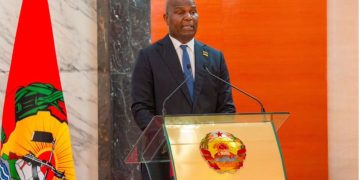
Maputo (MOZTIMES) - Mozambican President Daniel Chapo delivered his first State of the Nation address last week, an event that traditionally marks the final major political moment of the year. It was an opportunity to set the tone of his presidency and to outline a vision for a country emerging from electoral turmoil, economic stress and a protracted insurgency. Instead, the speech revealed a troubling deficit in leadership on peace and stability.
Chapo opened his address by acknowledging that he inherited a country “beset by terrorism, deeply weakened by violent, illegal and criminal protests, and with an economy in recession”. Yet while he articulated an ambitious agenda on economic recovery through what he calls “economic diplomacy”, his speech offered little by way of a credible strategy for rebuilding political and social stability.
At the heart of this failure lies Chapo’s fixation on the post-election protests. These protests were not spontaneous criminal acts, as he repeatedly suggested, but the direct consequence of the chaotic and fraudulent 2024 elections from which Chapo emerged as the main beneficiary. Although Chapo did not personally engineer the fraud, he has been unable, or unwilling, to detach himself from its political legacy and assume the role of a neutral guarantor of peace expected of a head of state.
This contradiction was most evident when Chapo claimed that in 2025 he governed for only eight of the year’s eleven months. He thus effectively erased the first three months of the year, dominated by the post-election unrest, which he described as “violent, illegal and criminal”, repeating the phrase nine times in the same speech.
Such a claim reflects a deeply flawed understanding of governance. The first quarter of 2025 was not a political vacuum. On the contrary, it was during this period that the most consequential political development of the year occurred: the meeting between Chapo and opposition leader Venâncio Mondlane, which brought an end to the post-election violence. Without this political breakthrough, economic recovery would have been impossible, and Chapo’s subsequent international campaign for investment would never have happened.
Political and social stability is, after all, the first of Chapo’s own twelve governance commitments. To deny that he governed during the very period when the foundations of that fragile stability were laid is not only inconsistent but revealing. It suggests either an excessive obsession with delegitimising protest or a reluctance to acknowledge that the dialogue which restored calm may not have originated from his own initiative, but from non-state mediators.
The root causes of the unrest are clear. Thousands of young people took to the streets not out of criminal intent, but in response to elections that were crudely manipulated by the electoral management bodies, notably the National Elections Commission and the Constitutional Council, both firmly under control of the ruling Frelimo Party. The brutal police repression of early peaceful protests only poured fuel on the fire. In the end, the political outcome favoured Chapo and Frelimo, securing their continued hold on power.
A frank acknowledgment of this reality could have strengthened Chapo’s stature. Recognising how flawed the elections were, and claiming credit for halting the ensuing violence through dialogue, would have cast him as a statesman rather than a partisan leader. He chose not to take this route.
Other figures in Frelimo take a different view. At a Maputo meeting last Friday, former First Lady Graca Machel said the post-election unrest could not be seen merely as criminal and warned that it would not be worth holding future elections if no changes are made to the election management model.
Equally troubling was Chapo’s near silence on the war in Cabo Delgado. While he expressed condolences to victims of cyclones, road accidents and post-election unrest, he offered little more than a generic assurance when referring to the hundreds killed and thousands displaced by terrorist attacks in Cabo Delgado, which have overflowed into Niassa and Nampula. This omission cannot be attributed to ignorance. Just weeks before his address, attacks in the Nampula districts of Memba and Eráti displaced more than 100,000 people in a matter of days.
On Cabo Delgado, Chapo largely repeated the mistakes of his predecessor, Filipe Nyusi. He framed terrorism as a global phenomenon, downplaying domestic drivers of violence, and focused almost exclusively on military responses: training programmes, partnerships with Rwandan and Turkish forces, investments in cyber-security and maritime defence. What was missing was any serious discussion of non-military pathways to peace.
The President also avoided addressing the deeply strained civil–military relationship, marked by persistent abuses by security forces against civilians, which risk further fuelling the insurgency. Nor did he explain how his government intends to support hundreds of thousands of displaced people when the State Budget still lacks a dedicated allocation for humanitarian assistance, leaving the burden largely to international agencies.
With such an approach, there is little reason to expect meaningful change in Cabo Delgado. When a country’s leadership shows reluctance to confront the structural roots of conflict, stability remains elusive. Chapo may succeed in projecting an image of calm sufficient to lure investors back to Mozambique’s gas sector. But economic diplomacy built on fragile foundations is unlikely to endure.
Without peace and political stability, economic gains will remain vulnerable, easily undone by the same cycles of violence that have plagued Cabo Delgado since 2017 and engulfed the country after the 2024 elections. For Mozambique, the challenge is clear. President Chapo must find a genuine balance between courting investment and confronting the political failures that continue to undermine peace and stability. Until then, economic diplomacy will remain little more than an exercise in optics. (BN)